As I mentioned in my recent post about my ongoing garage makeover, we own several bicycles—four, to be exact.
Still, none of those bikes were suitable for training for or competing in my upcoming first triathlon. Two are youth bikes, one is far too large, and the fourth is my twenty-two-year-old women’s cruiser.
There was nothing fundamentally wrong with the cruiser that a tune-up couldn’t fix, but with only seven clunky gears and a weight over fifty pounds, it simply wasn’t up to the task. Asking that old cruiser to climb hills was like asking my spaniel to do algebra—beyond her pay grade. I needed a new bike.
Google Did Not Have the Answer
Because this was a significant investment and I wanted a bike that would serve me well for years, I started researching online.
That’s when things got messy. Many articles and reviews were full of jargon and technical terms that left me more confused than informed. I wanted a straightforward recommendation for an over-50 woman who planned to do casual racing, not compete in the Tour de France.
But the research did teach me two important things:
A) Bicycle technology has changed a lot in 22 years.
B) I was out of my depth.
Time to call in an expert.
My friend Jason, who has competed in many triathlons, agreed to help. Visiting local bike shops with him, I learned enough to choose the right bike for me.
Here, in plain English, are the bike-buying basics every determined woman over fifty should know.
Different Bikes, Different Purposes, Different Price Points
There are many types of bicycles, but for practical purposes we can focus on four main categories: cruisers, mountain bikes, road bikes, and hybrids.
The Cruiser
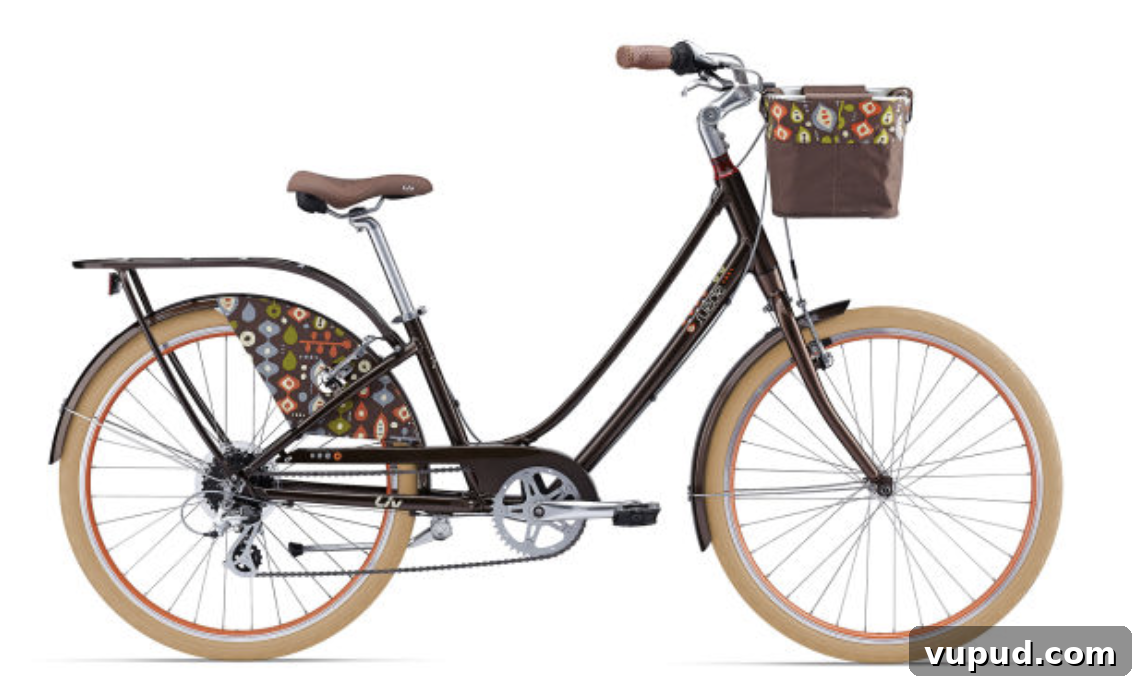
Cruisers are designed for relaxed rides around town or on bike paths. They are generally heavier, have fewer gears, and are more affordable—starting around $200. Seats are often wider and more padded, and cruisers tend to be visually appealing.
The cuteness factor nearly convinced me to buy one. I nearly purchased the Liv Cycling Suede 1, which I still find adorable, but it wasn’t right for my triathlon training. It may be a future fun purchase, though.
The Mountain Bike
Mountain bikes are built for off-road and trail riding. They handle shocks well and have wider, more stable tires for uneven or gravel terrain. Good entry-level mountain bikes start around $400 and can reach into the thousands for top models.
The Road Bike
Road bikes are racing-oriented: lightweight, rigid, and aerodynamic, with narrow tires and many gears to maximize speed. Quality road bikes typically start around $2,000 and can cost far more for high-end models.
The Hybrid
Hybrids blend features from other categories and are versatile for multiple uses. They sit between cruisers and road bikes in weight, offer a broad gear range, and have medium-width tires suitable for road, path, and some gravel. Prices vary, but solid hybrids begin around $400. They’re often the most practical choice—comfortable, efficient, and adaptable.
After comparing options, I realized a hybrid would be the best fit for my needs.
Gear Basics
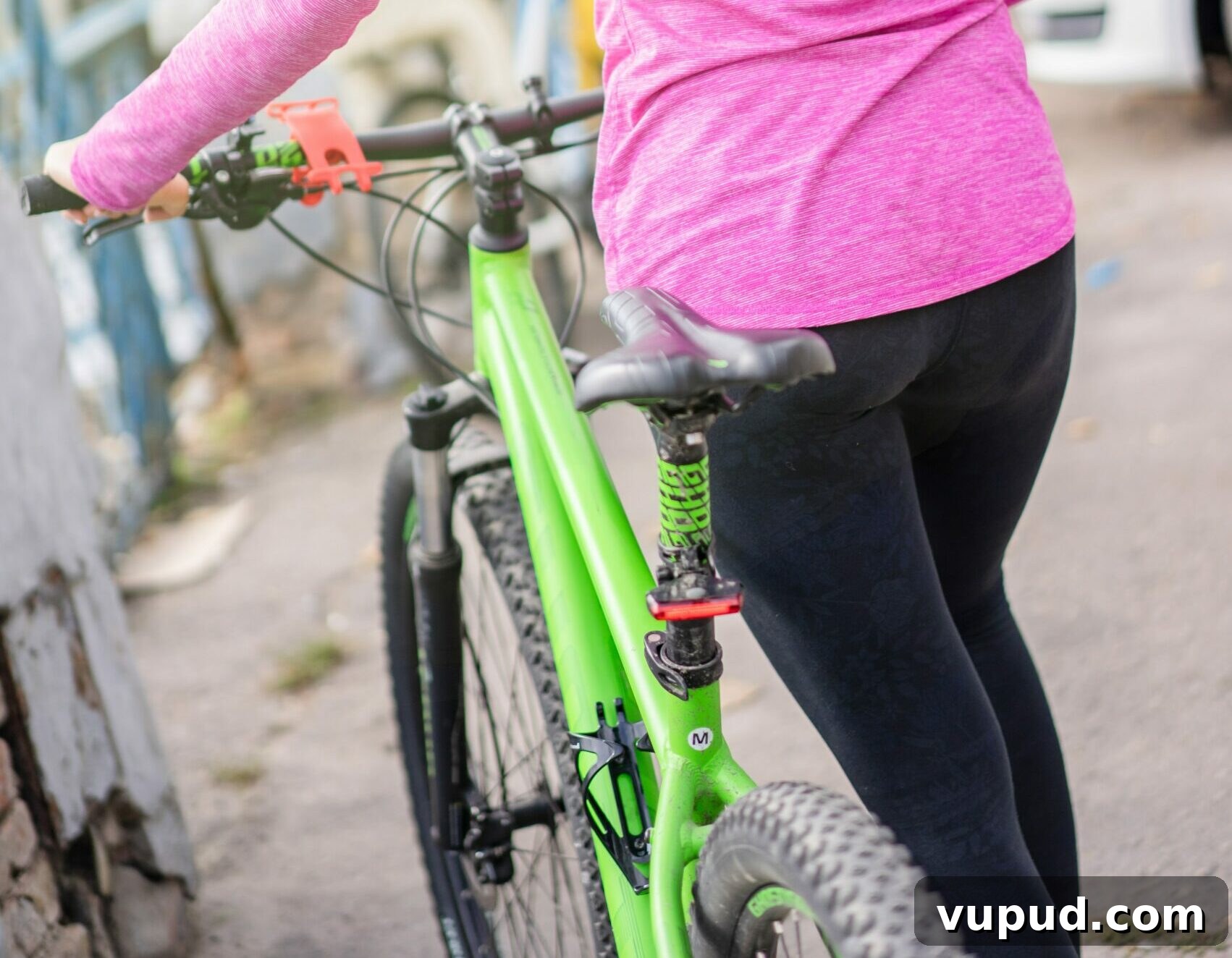
Many factors make a bike perform well—frame material, geometry, braking systems—but for everyday riders the gears matter most.
When tackling hills, more gears make life easier. My seven-speed cruiser could not handle hills comfortably, and while walking up a hill on a pleasure ride is fine, it’s not practical in a race. Being able to climb without dismounting is liberating.
Here’s a basic primer: use lower gears for climbing, middle gears for flats, and higher gears for descending. The number of gears can feel intimidating at first, but with a little practice you’ll learn which combinations work best.
As for brands, many experienced riders and shop techs recommend Shimano gears. They shift smoothly and are durable across a range of price points, so even mid-range Shimano components will serve most riders well.
Size Matters
Bikes come in different sizes, and getting the right fit is crucial for comfort and efficiency.
When standing next to the bike, the seat should line up roughly with your hip. Seated, with the pedal at its lowest point, your knee should remain slightly bent. A local bike shop can help you test models and find a frame size and saddle height that suit your body.
Accessories
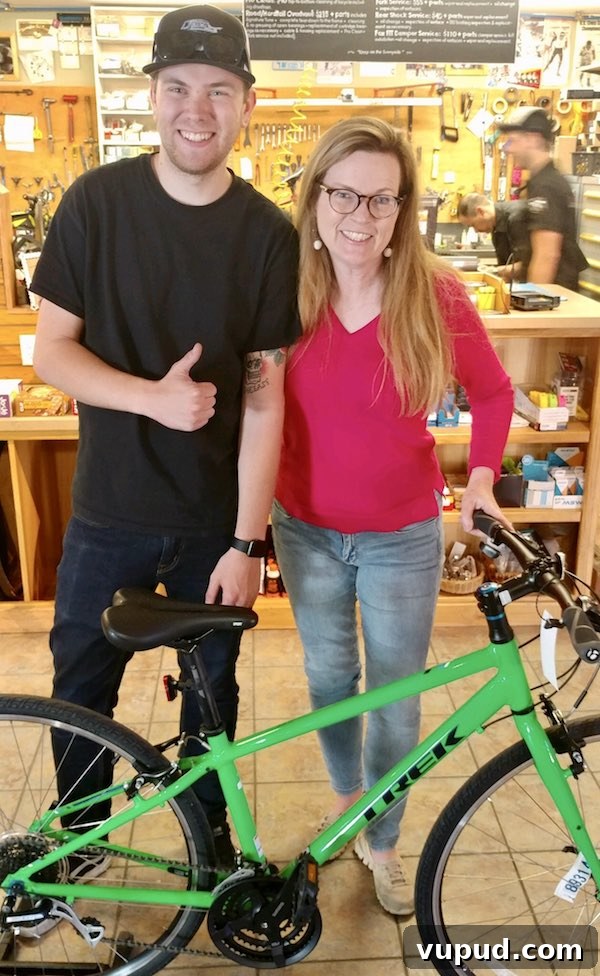
My budget was up to $800, and I found a great hybrid—a Trek FX 2—for $500. It makes hill climbing far easier, is lightweight and responsive, and I’ve affectionately named her The Flash. She may not be as adorably styled as the Suede 1, but she’s fast and reliable.
Buying local allowed me to invest in the bike and still afford a few accessories. I added a kickstand, a water bottle cage, toe cages for the pedals, and a sturdy lock. Your local shop can mount most accessories for you.
The one accessory you must not skimp on is a high-quality bike helmet. A good helmet could be the difference between a minor injury and something much worse—always wear one.
Shop Local
Buying from a local bike shop is one of the smartest choices you can make. A reputable shop will stand behind its products, offer fitting help, and provide maintenance support. My local shop includes free checkups and adjustments for the life of the bike, which is an invaluable benefit.
Even when shopping locally, compare shops and test ride different models. Salespeople and inventory vary, and trying several bikes helped me find the best fit and value.
With so many options, buying a bicycle can feel overwhelming, but you don’t need an engineering degree to make a good choice. Armed with basic knowledge about bike types, gearing, fit, and the support of a trusted local shop, you can find the right bike for your goals and enjoy riding with confidence.