https://www.instagram.com/p/BSohF_AlbN6/
I made these loaves yesterday using kefir as a leaven. I received several questions on Instagram about how I use the grains, so I’ve written this post to share ideas and the recipe for the loaves shown.
What is kefir?
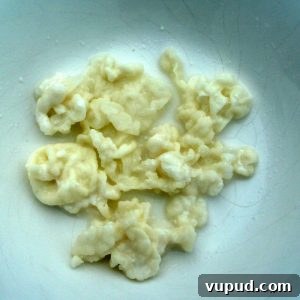
Kefir is a versatile cultured product made by fermenting milk with a SCOBY — a symbiotic culture of bacteria and yeasts. The grains look rubbery and irregular in shape; some are flat discs, others are small nodules. They feel a little like rubbery putty when handled.
The culture contains mostly lactic acid bacteria together with various yeasts. The bacteria convert sugars into lactic acid and carbon dioxide, while the yeasts produce carbon dioxide and small amounts of ethanol. As the milk acidifies, curds and whey separate, creating the characteristic texture and tang of kefir.
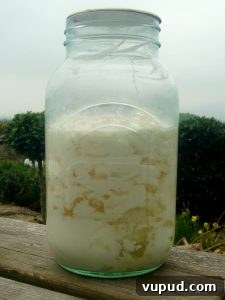
Here is a typical breakfast batch: roughly 500ml of milk with the grains after several hours’ fermentation. In the morning I strain off the grains, top up the milk, and leave it at room temperature to ferment again. In colder months I often add homemade rosehip or blackberry syrup for flavour. The drink is slightly tart and occasionally fizzy, and it works well in smoothies.
The grains multiply readily. Excess grains can be shared with friends or composted. Because the culture contains both lactic bacteria and yeasts, you can use strained kefir as a leaven for bread: the microorganisms will feed on flour sugars rather than milk, producing lift and flavour.
Kefir bread recipe
Below is the method I used for the loaves in the photos. This is a plain white kefir bread made with Shipton Mill No 4 flour; it’s ideal for simple sandwiches. The batch yields two loaves of roughly 750g each.
Ingredients
Poolish
Live strained kefir 285g
Strong white flour 215g
Date syrup or honey 50g
Dough
Poolish from above 550g
Strong white flour 650g
Fine sea salt 15g
Warm water 280g
Method
Start the poolish the afternoon before baking. Mix the poolish ingredients together in the bowl you will use for the dough to save washing up. Cover with plastic wrap or a damp towel and leave in a warm spot overnight. The sugar from the date syrup or honey gives the culture a quick boost; by morning the poolish should be slightly bubbly.
Add the remaining dough ingredients and knead using a stand mixer for about 6 minutes or knead by hand until the dough is smooth and elastic.
Cover and rest the dough for around two hours, then perform a series of folds to develop structure. I use the same folding technique I describe in my pain de campagne recipe: perform a stretch-and-fold, cover for an hour, fold again, cover for another hour, fold once more, and rest for an additional hour.
Divide the dough into two pieces and shape as desired. Allow the loaves to prove for approximately two hours at room temperature. Preheat the oven to 230°C while the loaves are proving.
Score the loaves decoratively, then bake them for 15 minutes at 230°C with a tray of boiling water placed in the bottom of the oven to create steam. After 15 minutes, remove the water tray, reduce the oven temperature to 190°C, and bake for a further 30 minutes or until the crust is deep golden and the loaves sound hollow when tapped.
Other uses for kefir
Kefir is useful beyond bread. I culture cream with kefir to make cultured butter and thick, tangy cultured cream similar to crème fraîche. If you continue to ferment milk or cream until it separates into curds and whey, you can make fresh cheeses.
Strain curds through muslin to reach the consistency you prefer — a ricotta- or labneh-like cheese works well, especially from goat’s milk. Season with salt, herbs, chilli or spices to taste. Pressing the curds in a mould with weights will yield a firmer cheese that can be aged.
Kefir grains will also ferment non-dairy “milks” such as coconut or almond milk, though results vary and may require adjustments.
The grains are adaptable and rewarding to work with: they create drinks, leaven breads, and produce cultured dairy products with distinctive flavour and texture.