
After a big holiday meal, this ham and bean soup is a favorite way to use leftover ham and a ham bone. Dried navy beans and simple aromatics simmer low and slow, transforming leftovers into a classic, comforting soup full of savory depth in every spoonful.
Looking for more leftover ham ideas? Try split pea soup with ham, ham and cheese sliders, deviled ham, a ham and cheese puff pastry slab pie, or a Monte Cristo sandwich for other tasty ways to use leftover ham.

Before You Start Cooking
- Plan ahead: Dried navy beans should be soaked overnight (about 12 hours) before cooking. Set them to soak the night before or early the same morning.
- Use a ham bone and leftover meat: This recipe works great with a spiral-cut or bone-in ham. If the ham was heavily glazed, trim off very sweet bits so the soup doesn’t become overly sweet.
- Pick the right pot: A heavy-bottomed Dutch oven or a 6–7 quart soup pot ensures even simmering and helps prevent beans from sticking as they cook.
How to Make Ham and Bean Soup
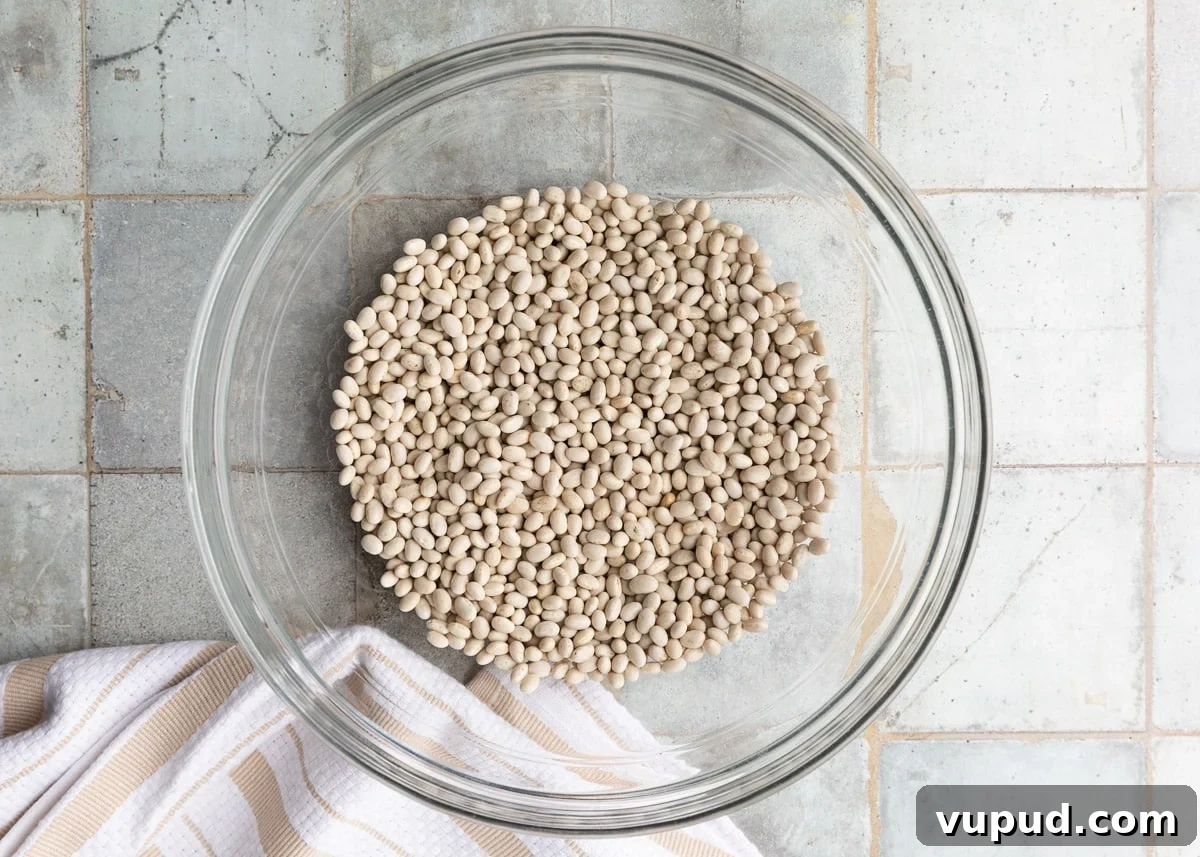
Step 1: Soak the Beans
Sort the dried beans, removing any shriveled beans or small stones. Rinse them well in a colander, then transfer them to a large bowl or pot and cover with cold water by about 2 inches.
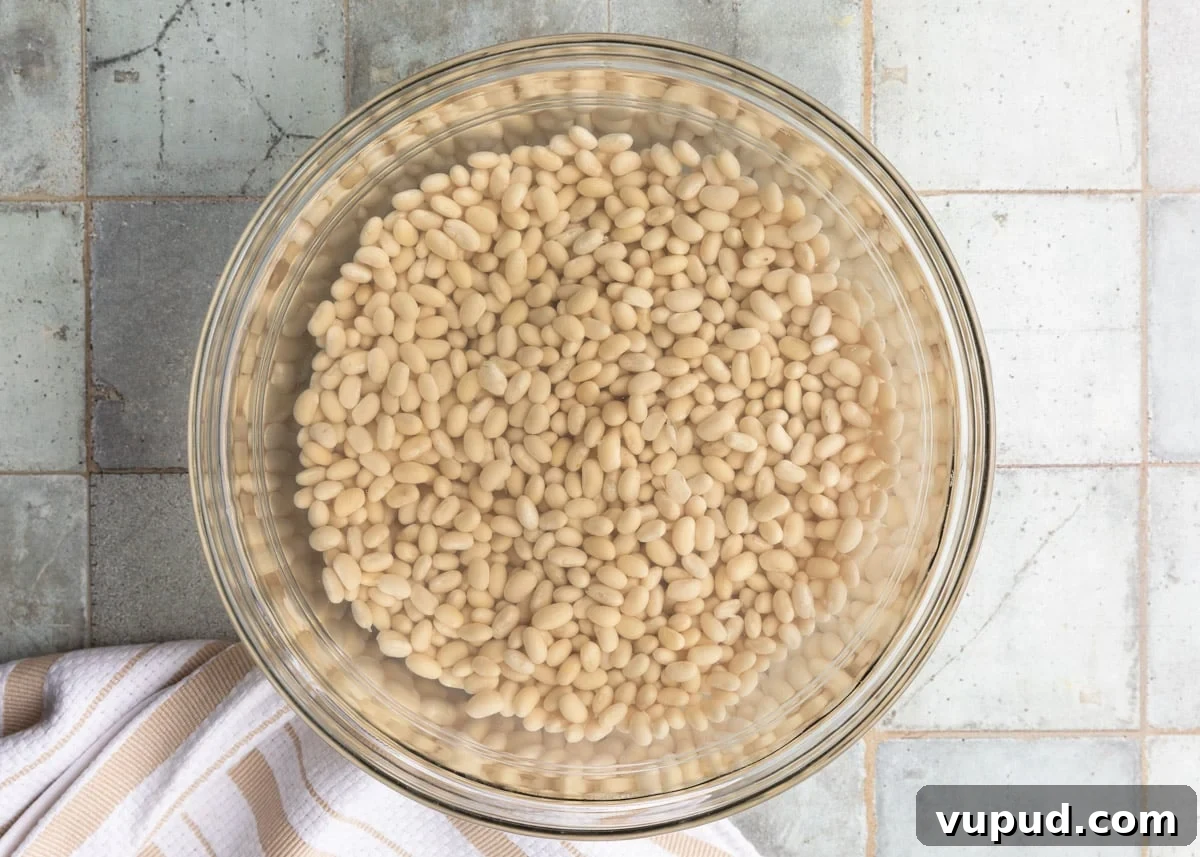
Soak the beans loosely covered at room temperature for about 12 hours. Drain and rinse before using.
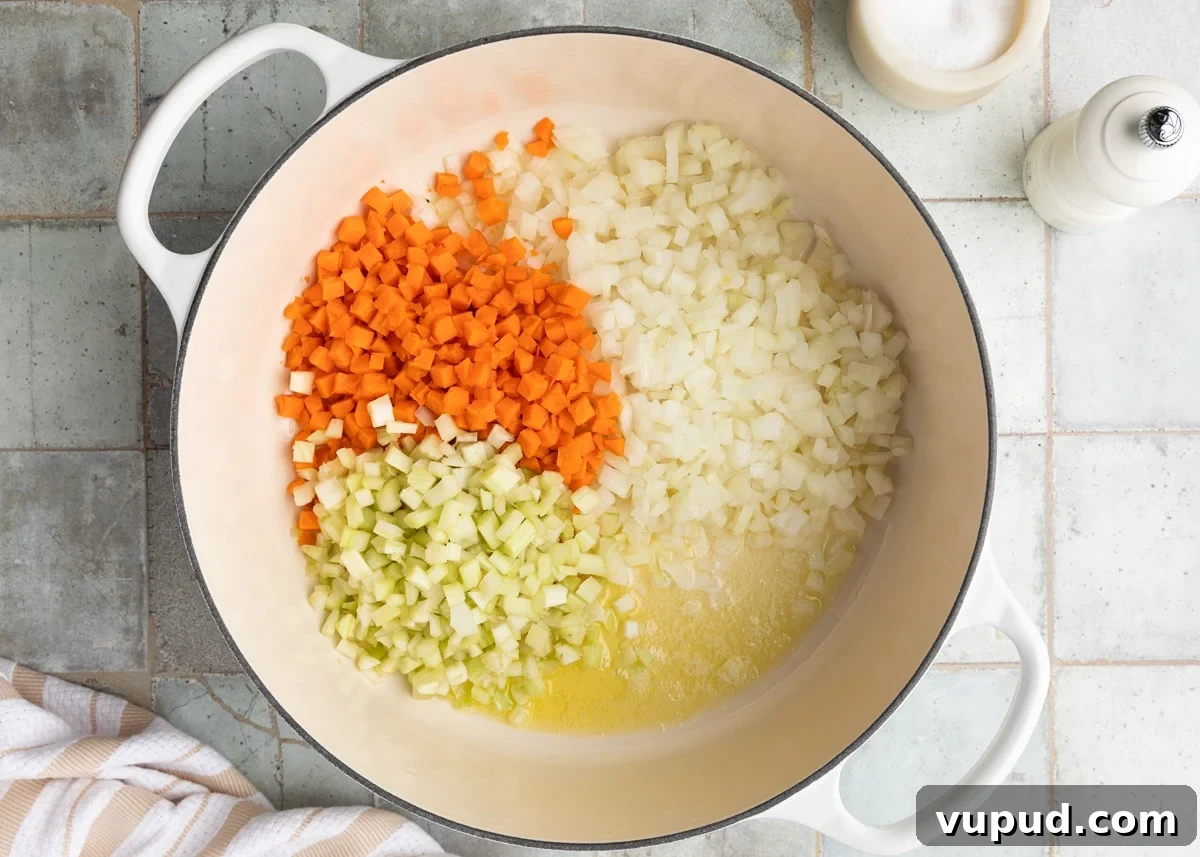
Step 2: Sauté the Aromatics
Start with a classic mirepoix: onions, carrots, and celery. In a large, heavy-bottomed pot, heat olive oil and unsalted butter over medium heat. Add the diced onion, celery, and carrots and cook until they begin to soften, about 5–8 minutes.
Stir in minced garlic, chopped rosemary, half the thyme, black pepper, and a little paprika. Cook another minute until fragrant.
Seasoning tip: Use sweet paprika for a gentle warmth or smoked paprika for extra smoky notes. Hold off on adding salt until the end because the ham and bone will season the broth.
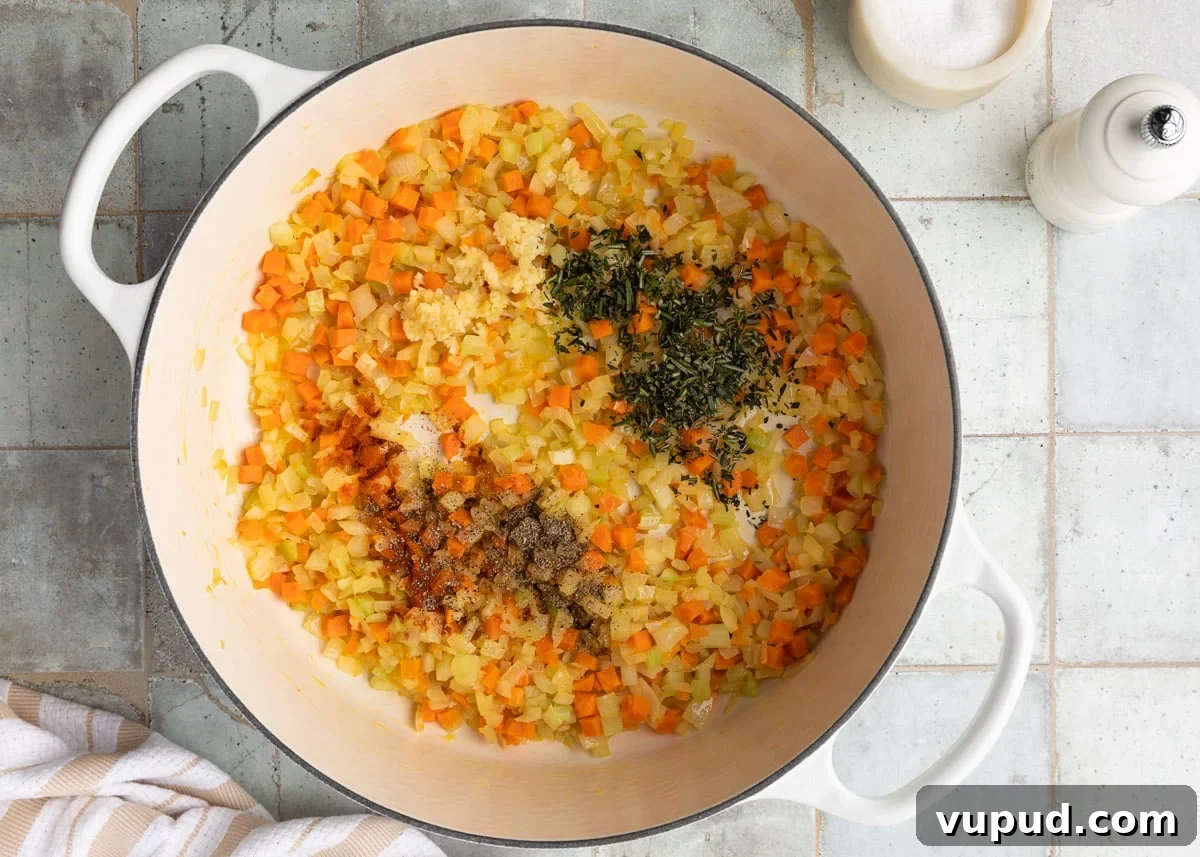
Step 3: Simmer the Soup
Add the soaked beans, the ham bone, and bay leaves to the pot. Pour in low-sodium chicken broth and enough water to comfortably cover the beans. The ham bone does not need to be fully submerged to flavor the soup.
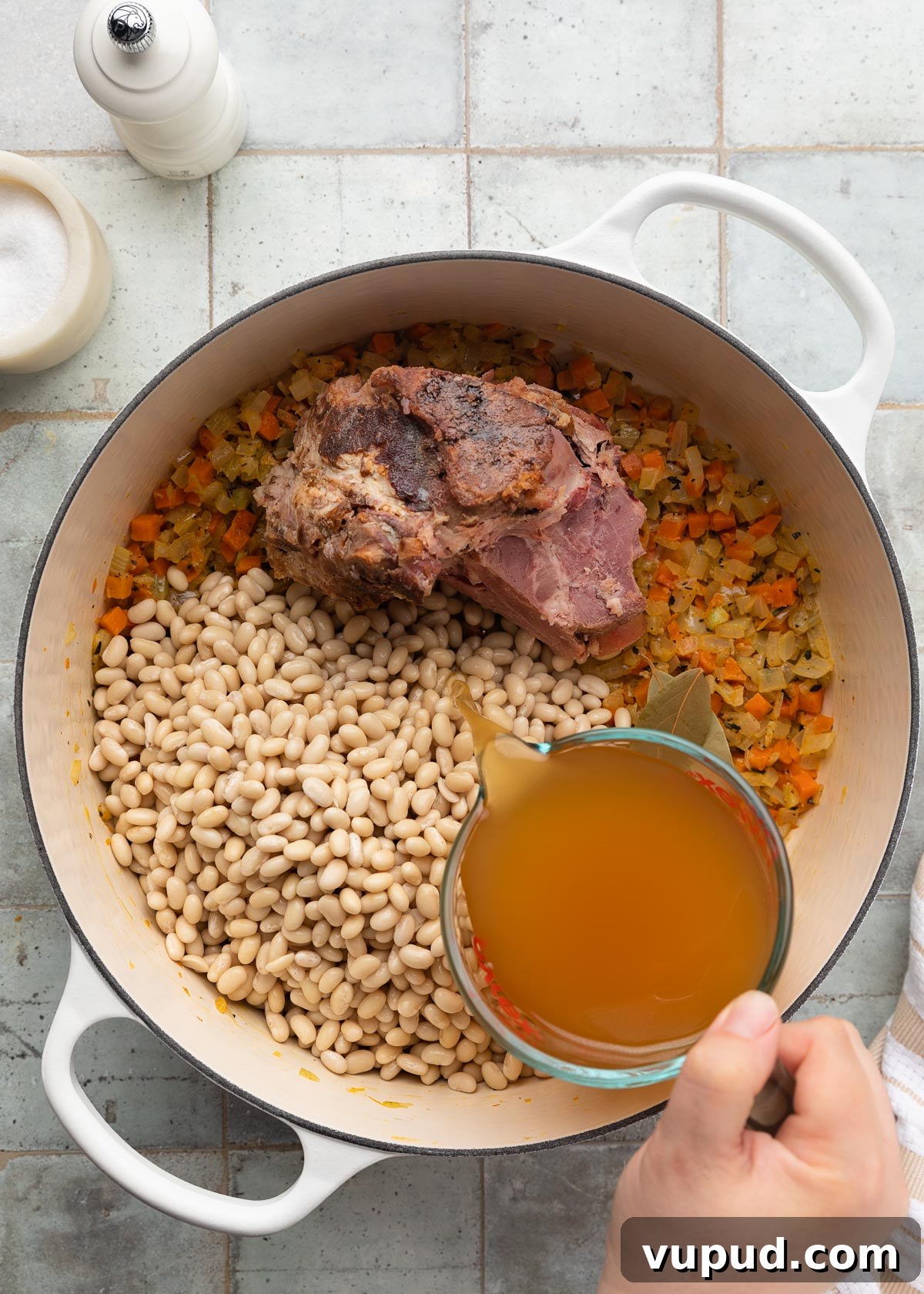
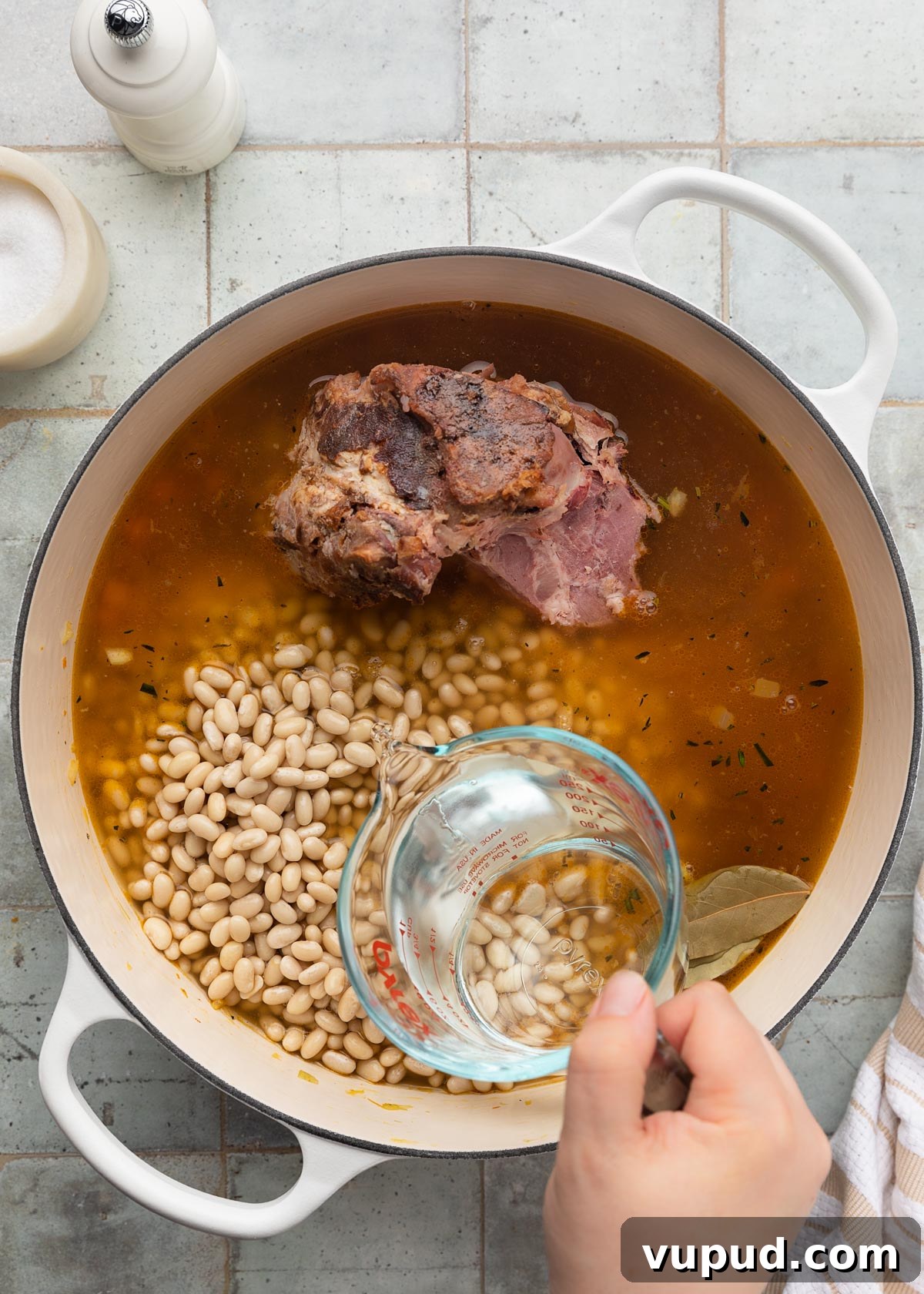
Bring to a boil, then reduce heat to a gentle simmer. Partially cover and cook until the beans are tender, usually 60–90 minutes, though some batches may need up to 2 hours. Stir occasionally and add broth or water if the soup becomes too thick.
When the beans are mostly tender with about 15 minutes left, remove the ham bone and stir in the diced or shredded ham. Simmer briefly to warm the meat and deepen the soup’s smoky flavor.
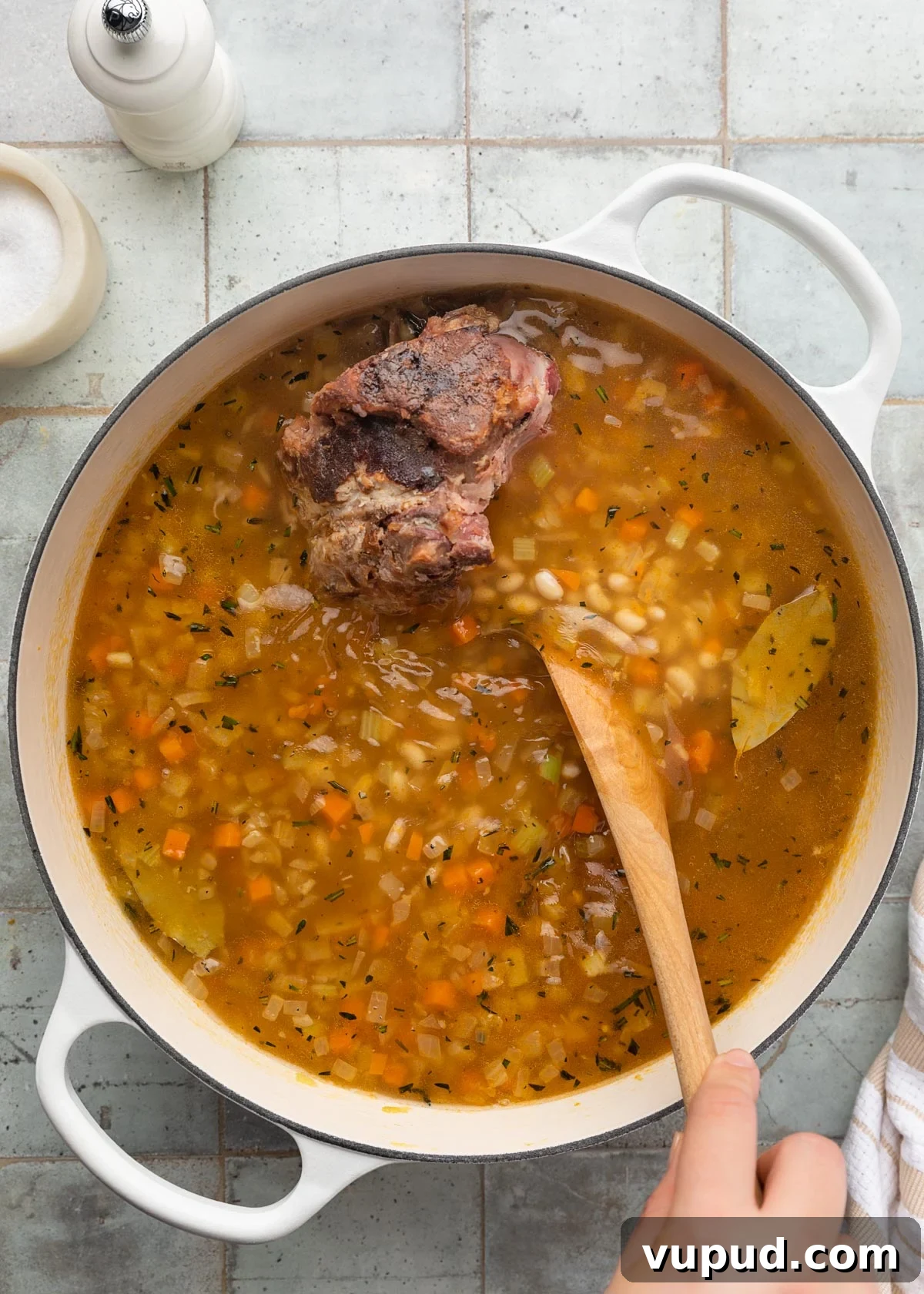
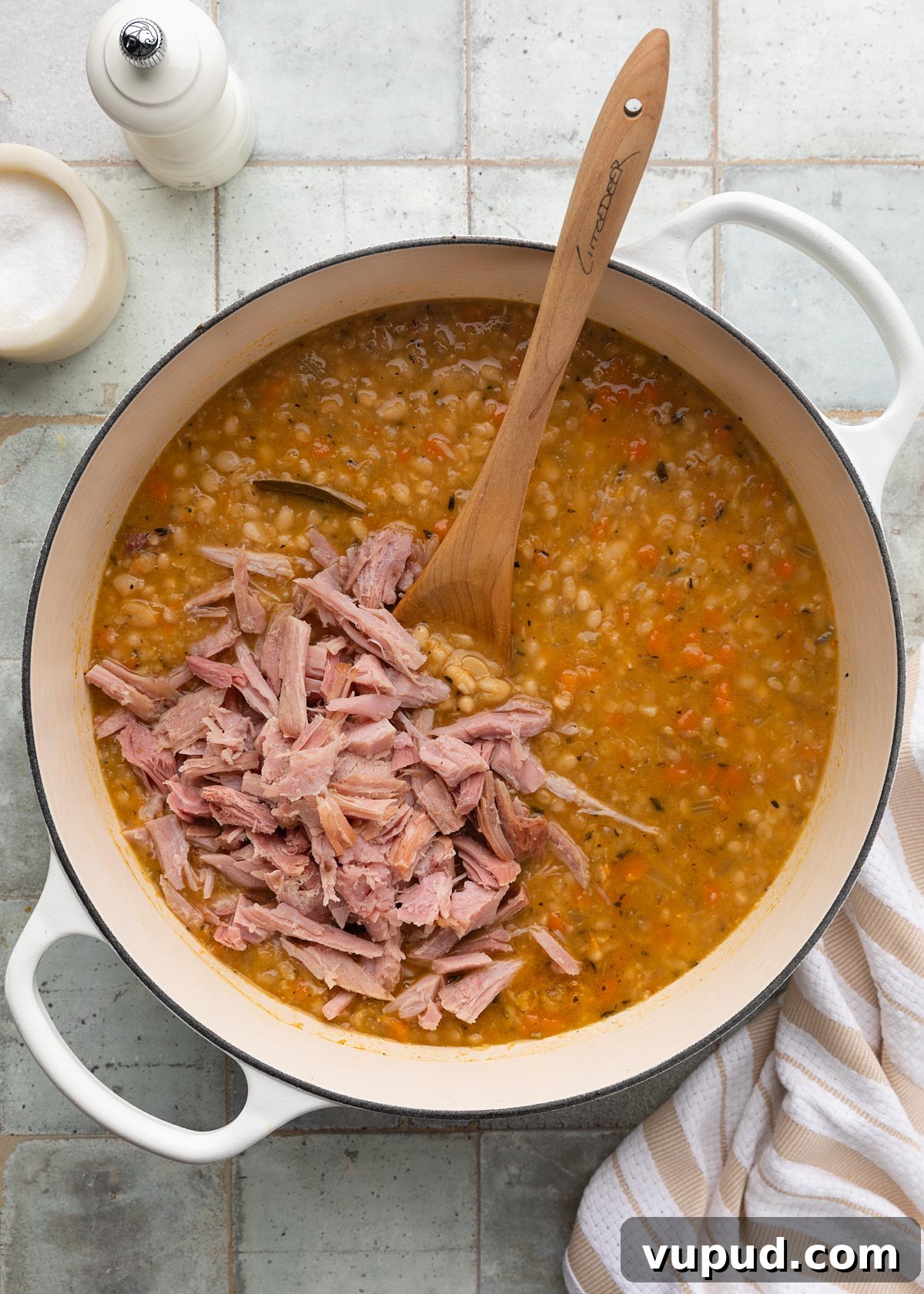
Step 4: Finish the Soup and Season
Discard the bay leaves and stir in the remaining thyme. Taste and season with salt and additional pepper as needed; depending on the ham and broth, little or no extra salt may be necessary.
To adjust texture, mash a small portion of the beans with the back of a spoon or a potato masher for a thicker, heartier soup. Keep some whole beans for texture—mashing about a quarter of the beans adds body without becoming paste-like. If you prefer a brothier soup, add more liquid.
Remember the soup will thicken as it cools and the beans continue to absorb liquid.
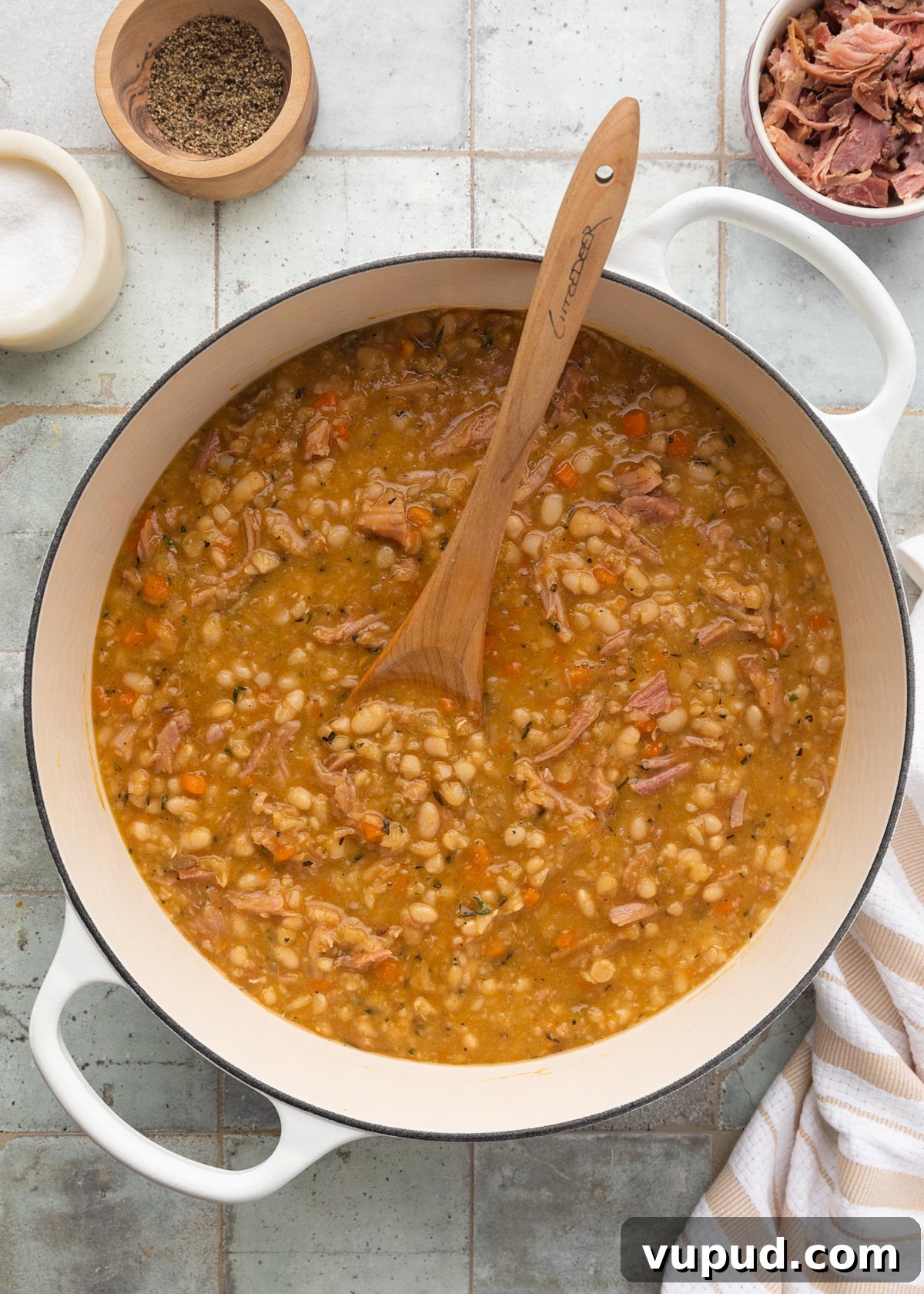
Serving Ham and Bean Soup
Ladle the hot soup into bowls and finish with freshly cracked black pepper and chopped herbs like parsley or extra thyme. A slice of crusty bread is ideal for dipping and soaking up the broth. Croutons also work well as a crunchy topping.
For brightness, add a squeeze of fresh lemon juice to individual bowls—this lifts the richness without making the soup taste lemony. Another optional finish is a sprinkle of grated Parmigiano Reggiano and a drizzle of extra virgin olive oil for a savory, rich touch.

Storing and Reheating
Ham and bean soup often tastes better the next day after the flavors meld. If it thickens in the fridge, loosen with a splash of broth or water when reheating.
Store leftovers in an airtight container in the refrigerator for 3–4 days, depending on the freshness of your ham. The soup freezes well for up to 3 months—use freezer-safe containers and leave space for expansion. Thaw overnight in the refrigerator before reheating for best texture.
- To reheat on the stovetop: Warm gently over medium-low heat, stirring occasionally.
- To reheat in the microwave: Heat individual portions in a microwave-safe bowl at 50–70% power for 2–3 minutes, stirring halfway through for even heating.
For food safety, reheat leftovers until they reach at least 165°F.

Variations
No Ham Bone
If you don’t have a ham bone, use a smoked ham hock instead and remove it after simmering. Ham hocks often have little meat, so add diced or shredded ham from a thick-cut ham steak to ensure meaty bites.
Add Potatoes
For extra substance, add ½-inch cubed potatoes during the last 20–30 minutes of simmering. Waxy varieties like Yukon Gold hold their shape well and won’t turn mushy. Potatoes release starch that naturally thickens the soup and can help mellow an overly salty broth.
Different Bean Varieties
Navy beans are traditional, but cannellini or Great Northern beans can be used interchangeably with similar soak and cooking times.
More Hearty Soup Recipes
- Minestrone Soup
- Italian Wedding Soup
- Broccoli Cheddar Soup
- Crockpot Hashbrown Potato Soup
- Creamy Chicken Gnocchi Soup
Craving more? Browse a full collection of soup recipes for additional ideas.

Ham and Bean Soup
Ingredients
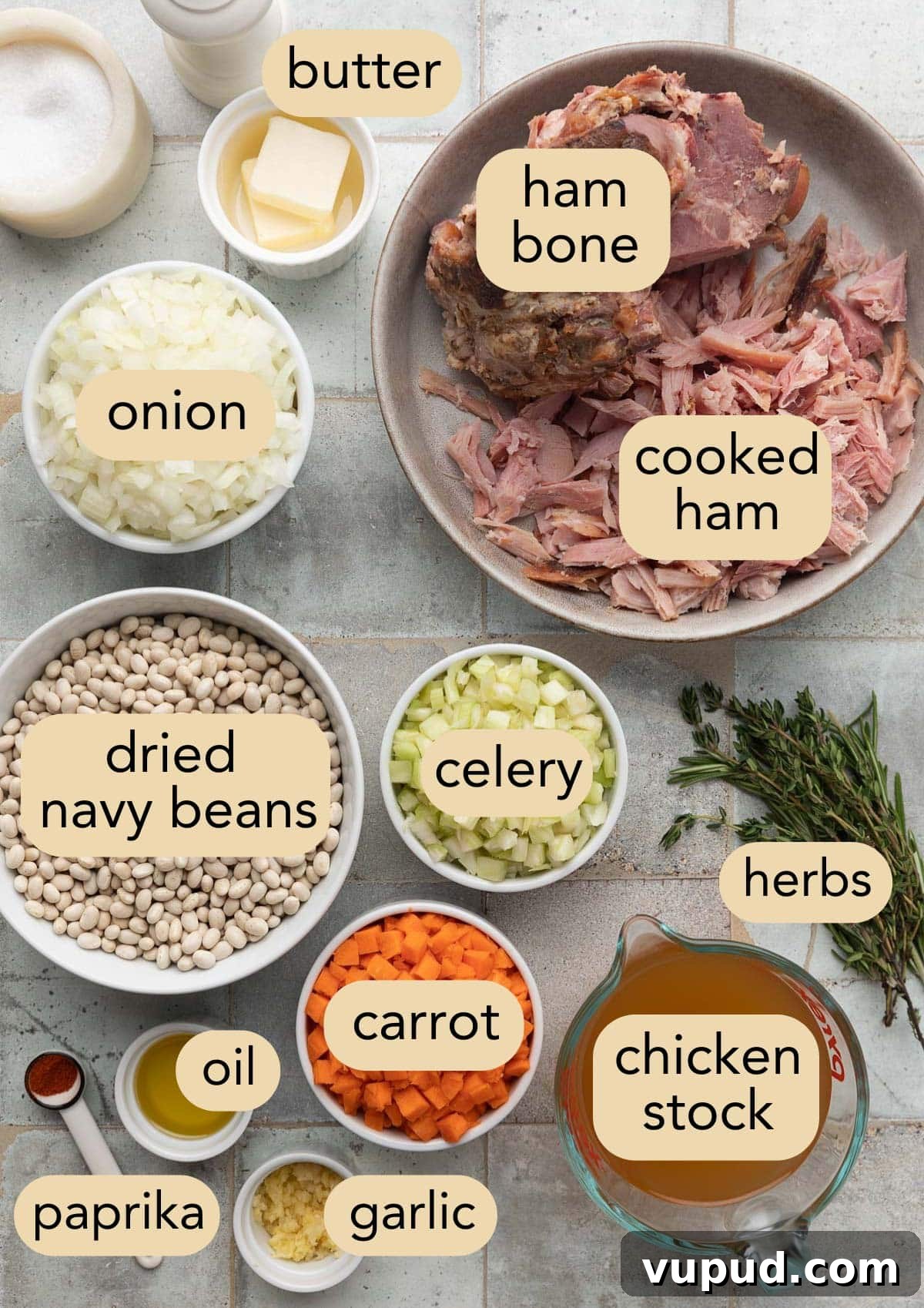
- 1 pound dried navy beans, sorted, soaked, and drained
- 2 tablespoons olive oil
- 2 tablespoons unsalted butter
- 2 cups chopped yellow onions
- 1 cup diced carrots
- 1 cup diced celery
- 3 large garlic cloves, minced (about 2 teaspoons)
- 2 teaspoons chopped fresh thyme leaves, divided
- 1 teaspoon chopped fresh rosemary
- ¼ teaspoon sweet or smoked paprika
- 1 meaty ham bone
- 2 small dried bay leaves
- 6 cups low sodium chicken broth or stock
- 2 cups water
- 1½ to 2 cups diced or shredded cooked ham
- kosher salt and freshly-ground black pepper, to taste
- Optional for serving: fresh parsley or thyme, crusty bread, lemon wedges, grated Parmigiano Reggiano, extra virgin olive oil
Instructions
-
Heat the olive oil and butter in a large, heavy-bottomed pot or Dutch oven over medium heat. Add the onion, carrots, and celery, and cook until they start to soften, about 5–8 minutes.
-
Stir in the garlic, rosemary, 1 teaspoon of the thyme, black pepper, and paprika. Cook until fragrant, about 1 minute.
-
Add the soaked and drained beans, ham bone, bay leaves, chicken broth, and water (enough to cover the beans). Bring to a boil, then reduce to a gentle simmer. Partially cover and cook for 60–90 minutes, stirring occasionally, until the beans are tender. Add additional broth or water if the soup thickens too much.
-
During the last 15 minutes of cooking, remove the ham bone and stir in the diced or shredded ham. Continue simmering until the ham is warmed through and the beans are tender.
-
Discard the bay leaves. Stir in the remaining thyme and season with salt and additional pepper to taste. For a thicker soup, mash a small portion of the beans in the pot. For a brothier soup, add more broth.
-
Ladle into bowls and garnish as desired before serving. Optional finishes include fresh herbs, a squeeze of lemon juice, grated Parmesan, or a drizzle of olive oil.
Notes
Cooking times do not include the overnight soak.
Paprika: Use sweet paprika for a classic flavor or smoked paprika to boost smoky notes from the ham.
Salt: Add salt at the end—ham and ham bones vary in saltiness and may already provide enough seasoning.
Cooking time: Bean cooking times vary with bean age, soak quality, and water hardness. Most beans will be tender within 90 minutes; some batches may need up to 2 hours. Add broth as needed to prevent the soup from getting too thick.
Nutrition Estimate
| Calories: 488kcal
| Carbohydrates: 57g
| Protein: 30g
Nutrition information is automatically calculated and should be used as an approximation.
Recipes use US customary measurements and have not been tested for high altitude cooking.
Like this? Rate and comment below!