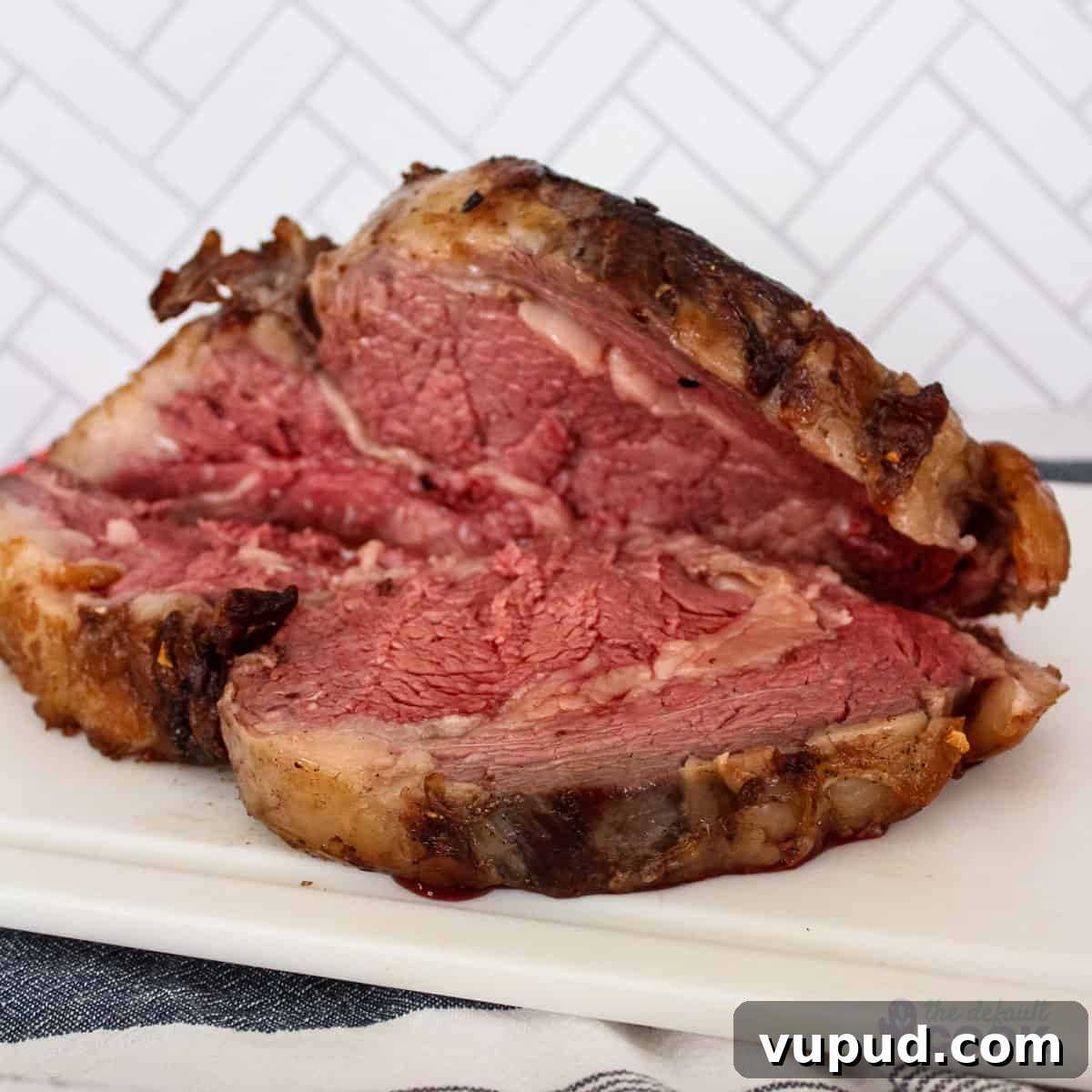
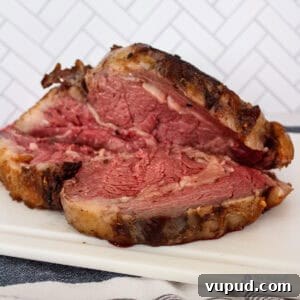
Sous Vide Prime Rib Roast delivers an unbelievably tender, melt-in-your-mouth main course. Whether you’re preparing a holiday centerpiece or elevating an ordinary weeknight, this straightforward five-ingredient recipe produces reliably excellent results.
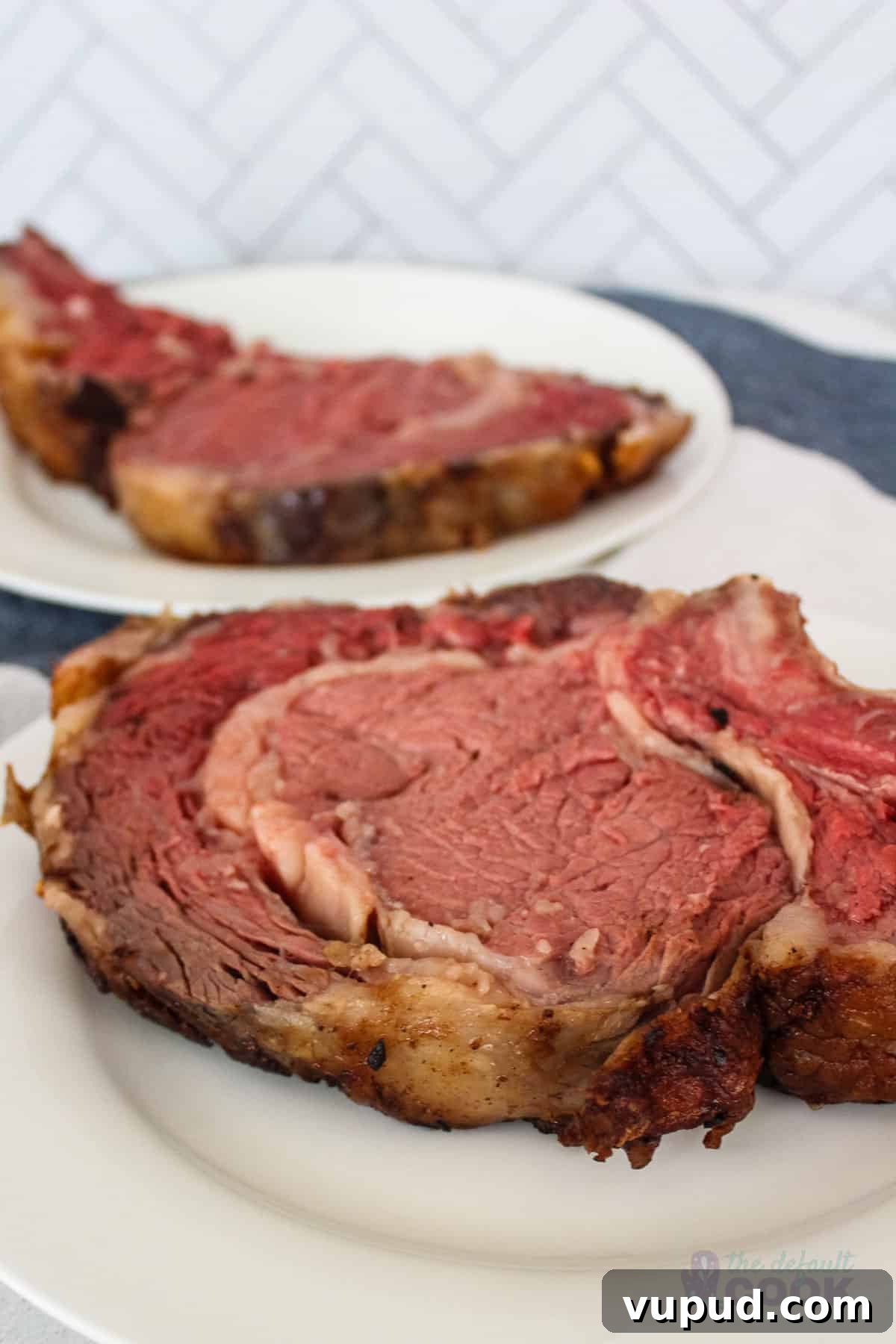
Why You’ll Love This Sous Vide Prime Rib Recipe:
- Exceptional tenderness: Sous vide cooks gently and evenly, breaking down connective tissue without toughening the exterior the way high-heat roasting can.
- Almost hands-off: Active time in the kitchen is minimal—about 10 minutes—so you can focus on sides, guests, or other preparations while the roast cooks.
- Simple flavoring: A three-ingredient compound butter adds rich garlic and pepper notes without complicated prep.
What Is Sous Vide?
Sous vide, French for “under vacuum,” uses airtight sealing and a temperature-controlled water bath to cook food precisely to the desired internal temperature. Vacuum sealing or the water-displacement method removes air so the meat stays in direct contact with the bag. An immersion circulator holds the water at a constant temperature, ensuring consistent doneness and preserving tenderness that can be lost with conventional high-heat cooking.
What You’ll Need
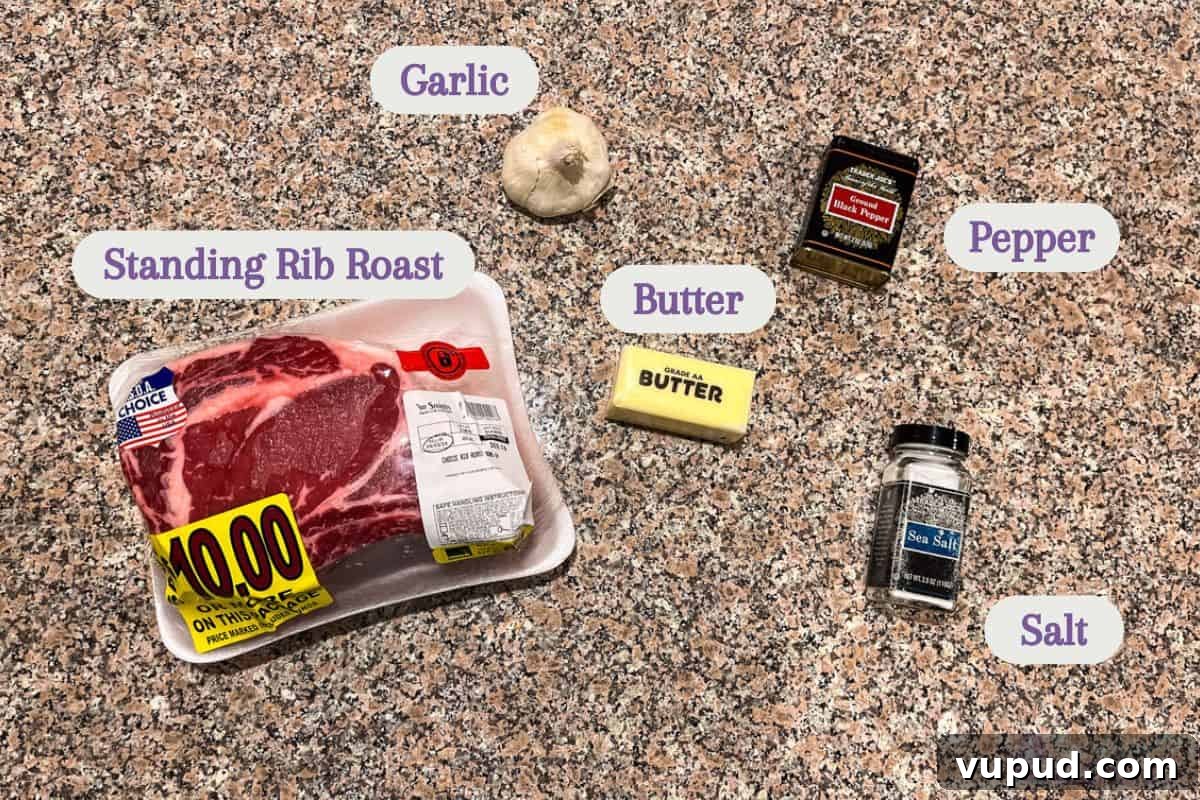
Ingredients
Standing rib roast – A bone-in Choice or Prime rib roast works well. Choose a size that fits your bag and container; a two-bone roast typically fits a one-gallon zip-top bag. The sous vide method scales to any size as long as it fits the bag and pot.
Garlic – Six cloves of fresh garlic for the compound butter. If needed, garlic powder can substitute in a pinch.
Salted butter – Soften at room temperature for 30–60 minutes or in short microwave bursts. It should be spreadable but not melted.
Salt & black pepper – Salt cures and seasons the roast overnight; black pepper adds aromatic depth to the butter. Kosher or sea salt are both good choices.
Equipment
Sous vide immersion circulator – Maintains a stable water temperature for precise cooking.
Cast iron skillet – For the final high-heat sear to develop a golden crust.
Mixing bowl and fork – To combine the compound butter.
Tongs – For safely moving the hot roast.
Zip-top or vacuum seal bag – A gallon zip-top bag works for most smaller roasts using the water-displacement method.
Large stockpot or container – Big enough to hold the water bath and the roast. A 12-quart pot or dedicated sous vide container is ideal for larger cuts.
Aluminum foil and a carving knife – For resting and slicing after searing.
How to Sous Vide Prime Rib
Step 1: Cure the roast.
Generously salt the rib roast on all sides, place it on a plate, and refrigerate uncovered overnight to allow the salt to flavor and tenderize the meat.
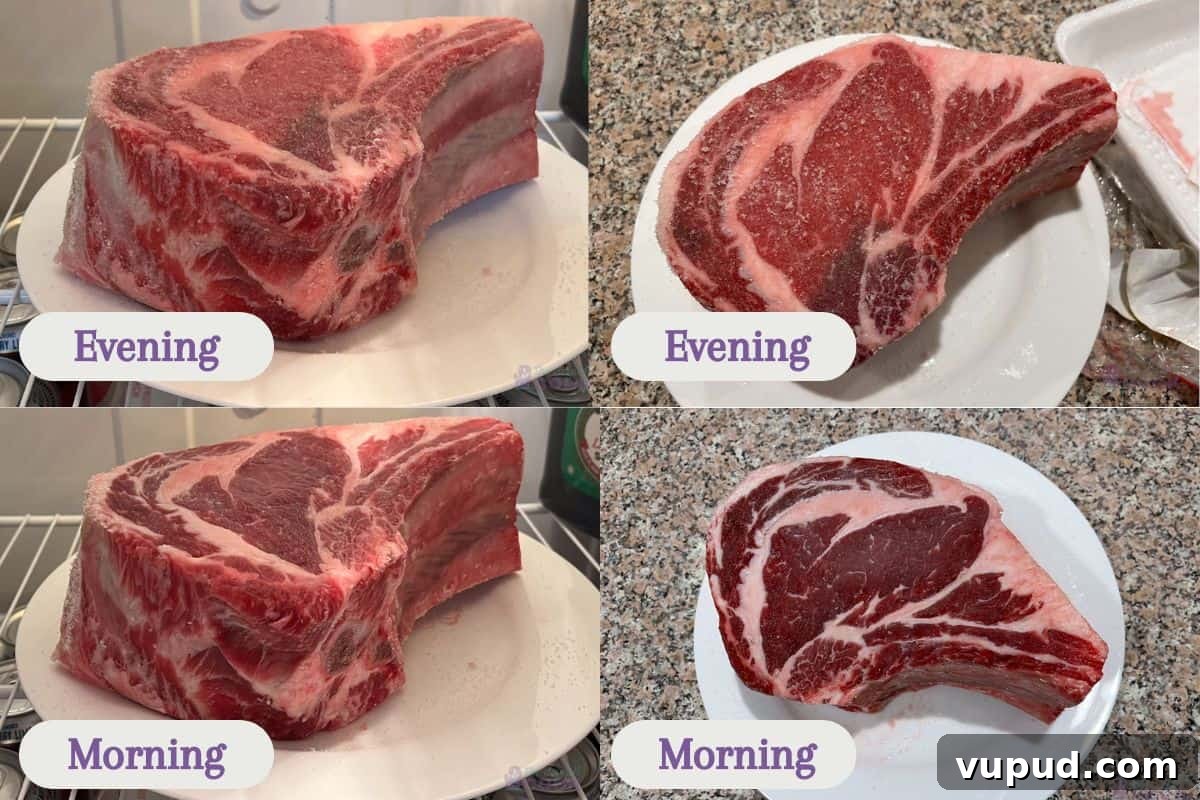
Step 2: Season and dry.
Pat the roast dry with paper towels to remove moisture drawn out by the salt. Add more salt if desired, and season lightly with pepper.
Step 3: Seal the roast in a bag.
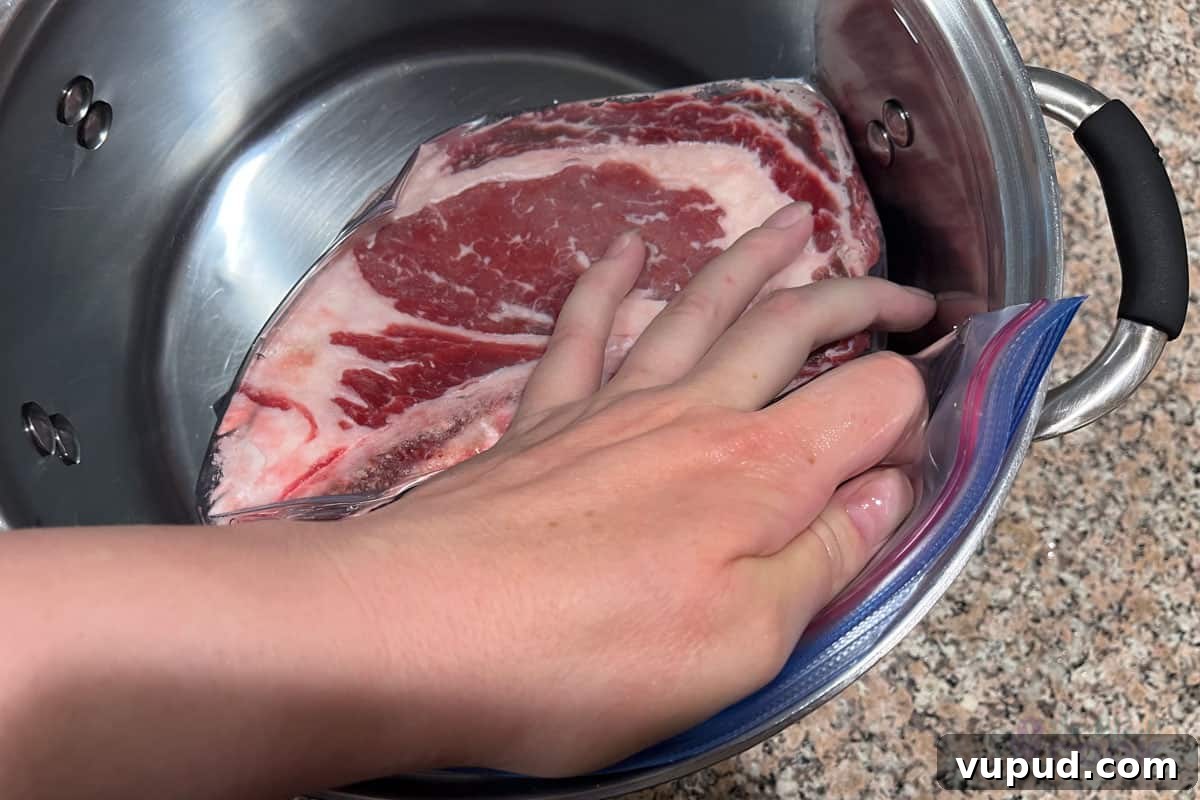
Place the roast in a suitable bag and remove the air. If using the water-displacement method, lower the open bag into the container so water pushes air out, keeping the bag’s opening above the water line as you seal it. The roast should remain submerged once sealed.
Step 4: Cook sous vide.
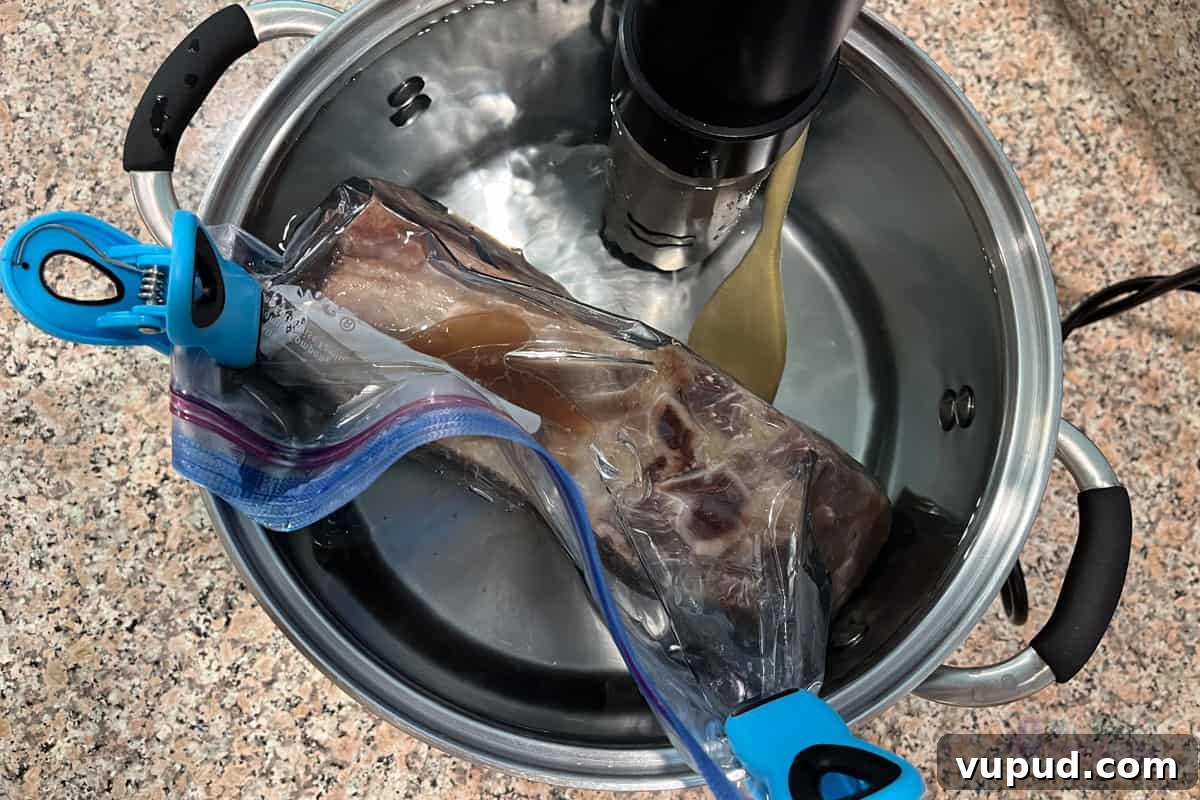
Set the circulator to 132°F for medium-rare and cook the roast for 6–8 hours. Use clips or a utensil to keep the bag from being drawn into the circulator and ensure even cooking.
Step 5: Make the compound butter.
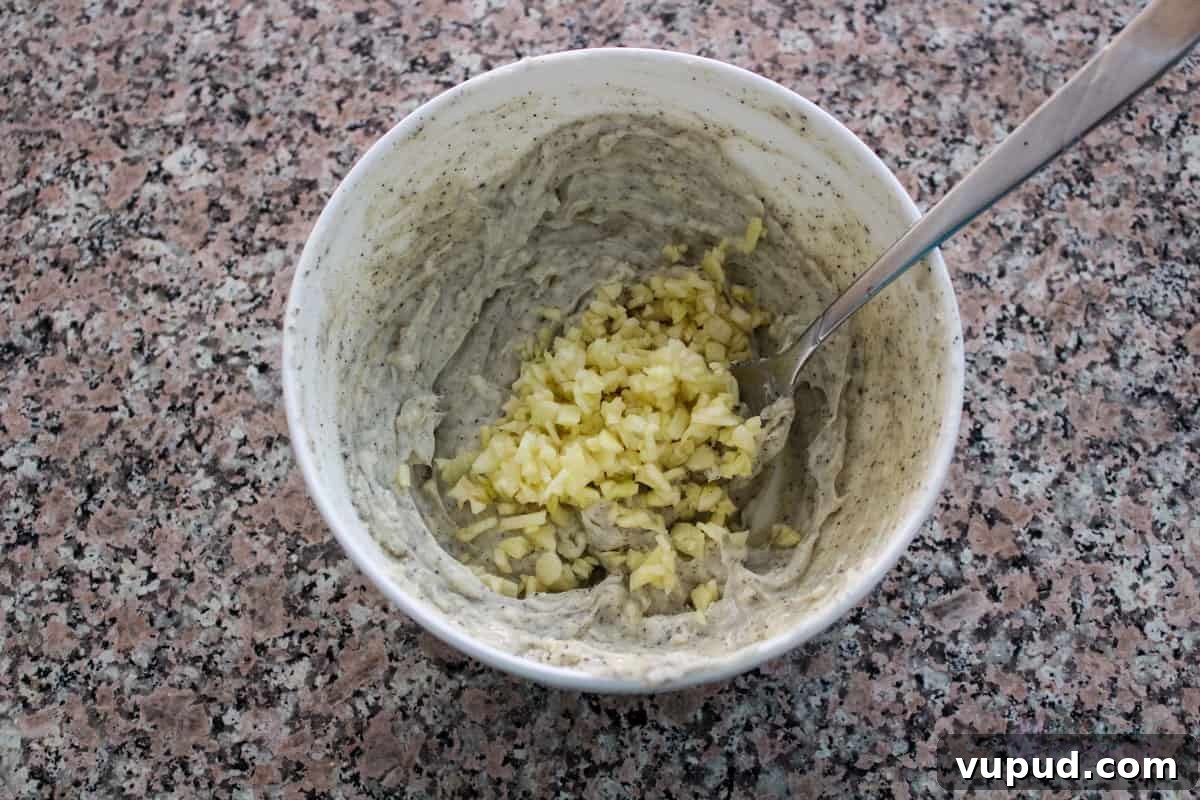
Near the end of the cooking time, soften the butter and mince the garlic, discarding any green sprout. Mix the butter, minced garlic, and black pepper in a bowl until combined.
Step 6: Apply the butter.
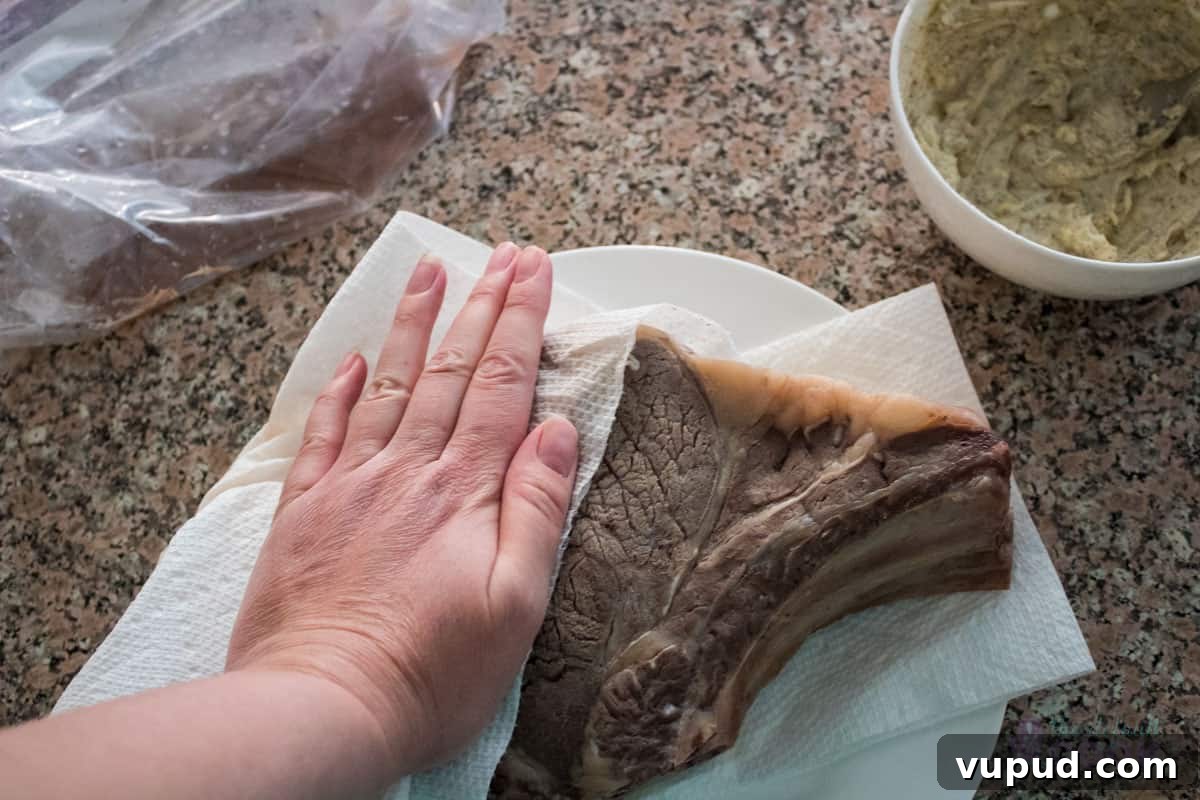
Remove the roast from the bag, thoroughly pat it dry, and spread the compound butter over all surfaces of the roast.
Step 7: Prepare to sear.
Preheat the oven to 500°F with a cast iron skillet inside until very hot. Using tongs, place the buttered roast standing on its side in the skillet—be careful, it will be extremely hot.
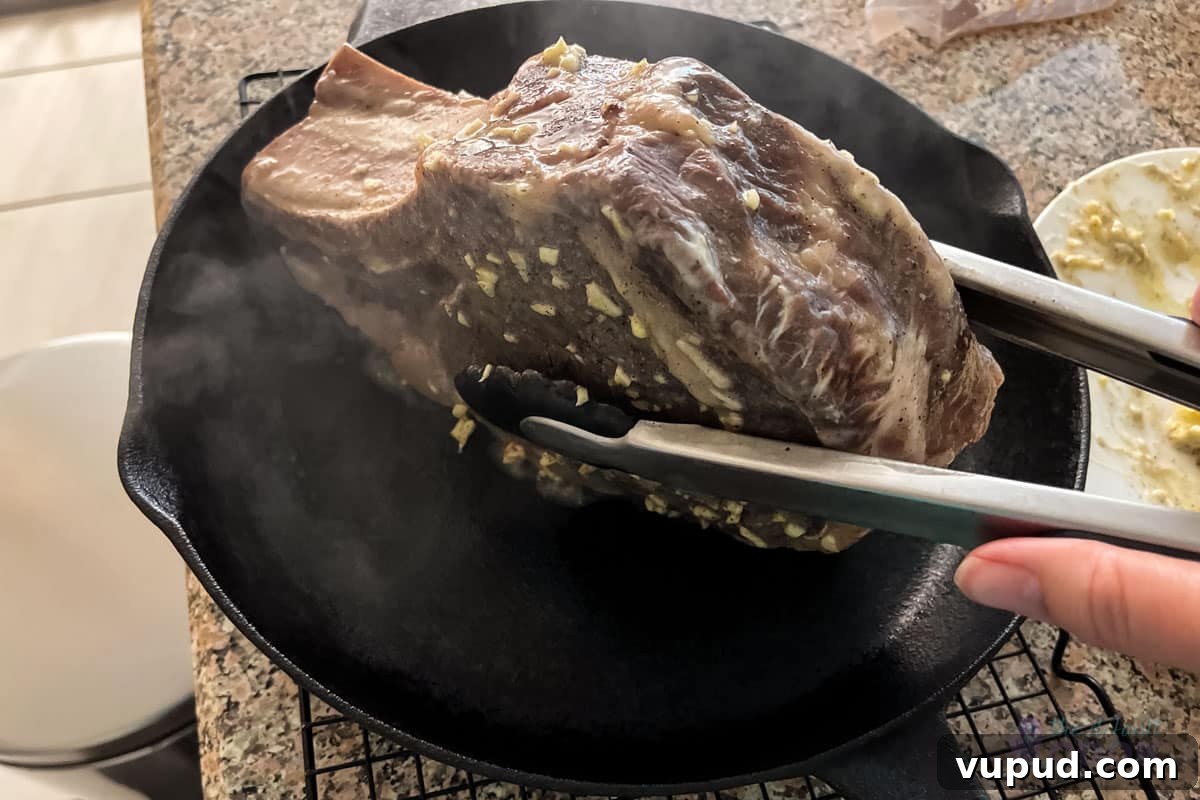
Step 8: Sear the roast.
Return the skillet to the 500°F oven and sear the standing roast for about 10 minutes. The high heat triggers the Maillard reaction and melts the butter into a rich, brown crust.
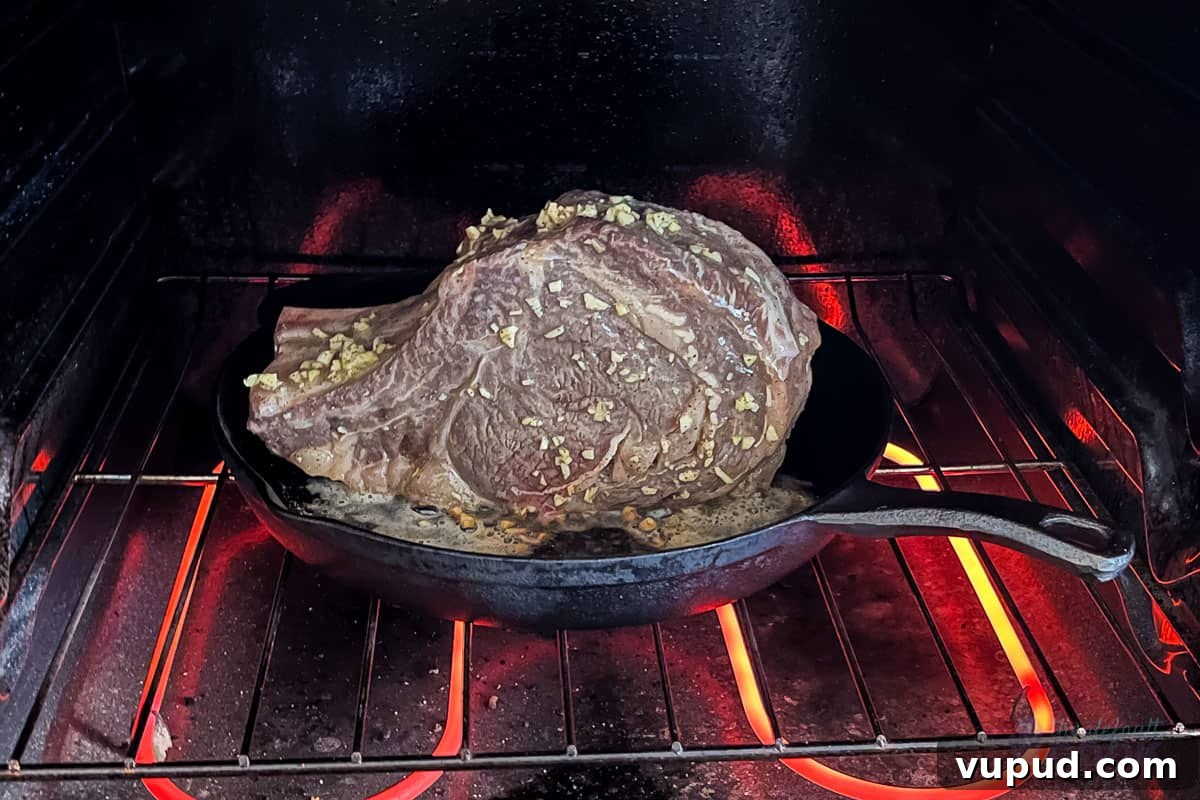
Step 9: Rest and slice.
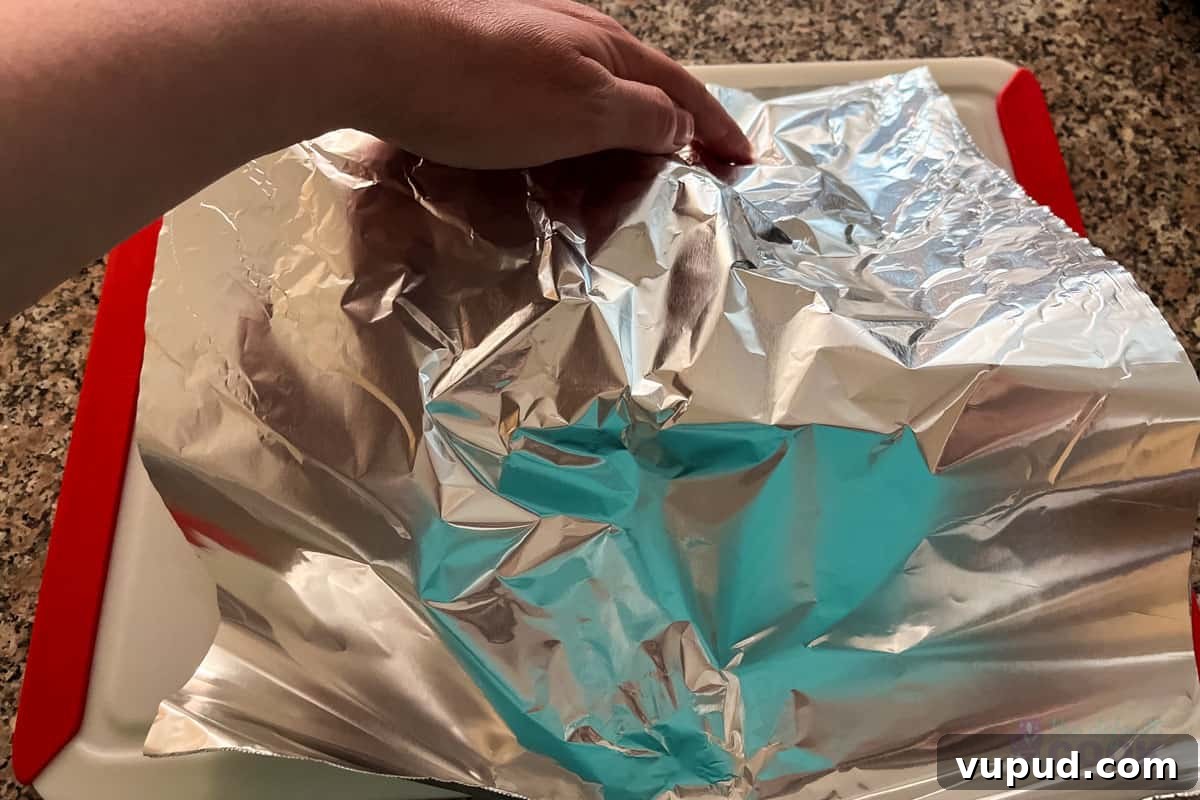
Move the roast to a cutting board, loosely tent with foil, and let it rest for 10–15 minutes before slicing to allow juices to redistribute.
Recipe Success Tips
- Salt overnight: Salting the roast and letting it sit uncovered in the refrigerator for several hours or overnight improves flavor and texture.
- Remove air from the bag: Ensure the bag is fully sealed and free of air so the roast stays submerged and cooks evenly.
- Secure the bag: Clip the sealed bag to the side of the pot or use magnets to prevent it from flipping or being pulled into the circulator.
- Adjust time by size: Smaller roasts can finish in about 6 hours; larger, thicker cuts may need up to 8 hours to come to temperature throughout.
- Avoid excessive cooking: While sous vide is forgiving, cooking beyond 10–12 hours can overly soften the texture. For most roasts, 6–8 hours gives the best balance of tenderness and structure.
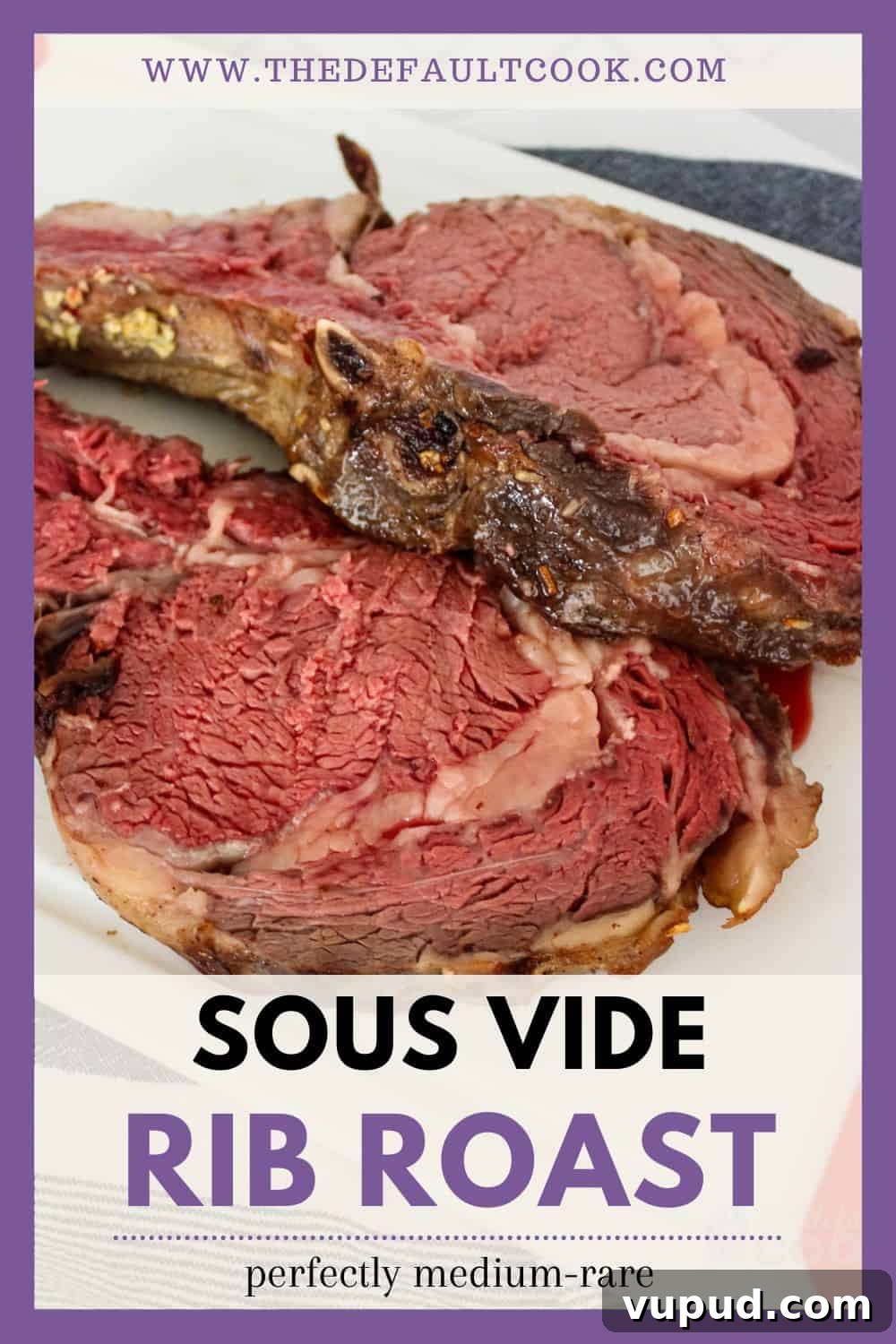
Serving Suggestions
This sous vide prime rib pairs nicely with simple, crowd-pleasing sides. Consider garlic mashed potatoes, roasted or air-fried vegetables, focaccia or crusty bread, and roasted garlic potatoes. The roast is juicy enough on its own, but an au jus or horseradish sauce can be served on the side for dipping.
Storage and Reheating
- Refrigerate: Store leftovers in an airtight container for up to 5 days.
- Freeze: You can freeze the roast after the sous vide bath (before searing). Reheat in a 131°F water bath for 30–45 minutes per inch of thickness, then sear.
- Reheat: Warm covered in a 300°F oven until heated through, about 15–20 minutes depending on size.
Enjoy!
This sous vide standing rib roast method simplifies what can otherwise feel like an intimidating cut to cook. It produces consistent, restaurant-quality results with minimal active work—perfect for holidays or any special meal. I hope you enjoy a tender, flavorful roast every time you try it.
📖 Recipe
Sous Vide Standing Rib Roast
Anne Aslanides
Ingredients
- 3.5 lb Rib Roast Choice or Prime
- 4 oz butter salted
- 6 cloves garlic
- 1 tablespoon sea salt
- 1 teaspoon black pepper
Instructions
-
Generously salt the rib roast and refrigerate uncovered overnight.
-
Mince garlic and soften butter. Combine garlic, butter, and black pepper.
-
Pat the roast dry with paper towels to remove moisture from salting. Add more salt if desired.
-
Place roast in a zip-top or vacuum-seal bag, remove the air, and cook in a 132°F sous vide water bath for 6–8 hours.
-
Preheat oven to 500°F with a cast iron skillet inside. Remove roast from the bag, pat dry, and coat with the butter mixture.
-
Using tongs, place the roast standing on its side in the hot skillet and sear in the oven for about 10 minutes.
-
Transfer to a cutting board, tent with foil, and rest 10–15 minutes before slicing. Enjoy!
Podcast or Video
Notes
With the water-displacement method, a two-bone roast is typically the largest that fits in a one-gallon zip-top bag. Select a roast that fits your container.
Nutrition uses the full stick of butter for calculation; some butter may melt away during searing.
Nutrition
Nutrition information is an estimate and provided as a courtesy. Use your preferred calculator and exact ingredients for the most accurate results.