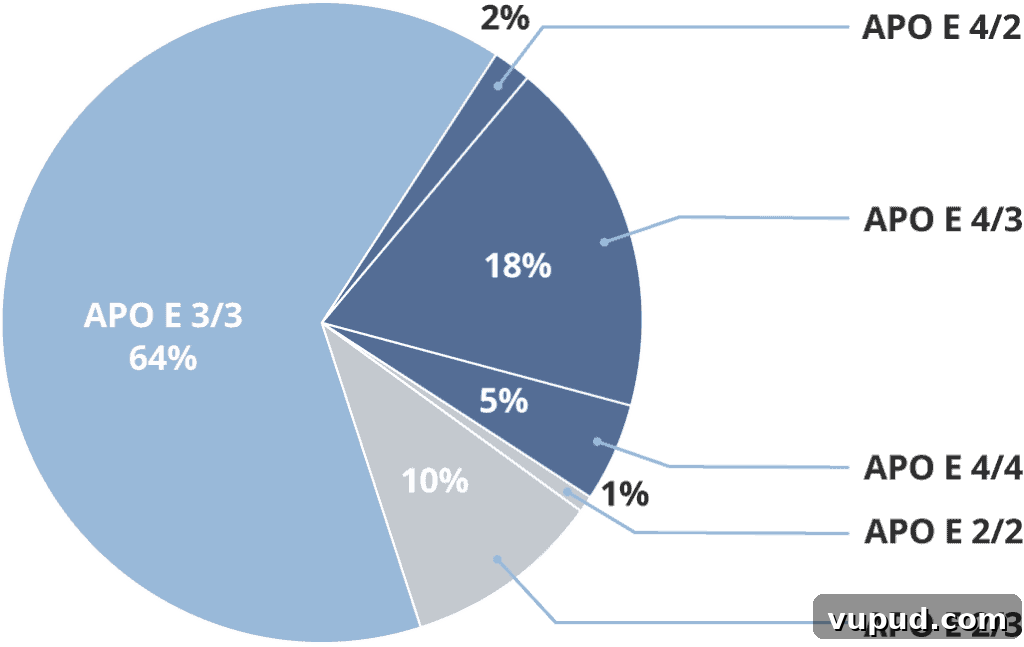
There has been growing discussion about the APOE4 gene and how different diets interact with APOE variants. Understanding why some people respond well to higher-fat diets while others do better with lower saturated fat intake requires looking at genetic differences, particularly variations in the APOE gene.
APOE (apolipoprotein E) influences how the body processes fats and cholesterol. Each person inherits two APOE alleles, which together determine how their body makes apolipoprotein E. This protein combines with lipids to form lipoproteins, which transport fats and cholesterol through the bloodstream.
APOE Gene Types
There are three common APOE isoforms, and combinations of these produce six possible genotypes:
- APOE2 – Often tolerates higher fat, lower carbohydrate diets well; saturated fats are generally more acceptable for many APOE2 carriers.
- APOE3 – Considered neutral and typically adapts well to a variety of dietary patterns.
- APOE4 – Tends to respond better to diets emphasizing monounsaturated fats and lower saturated fat intake, typically paired with lower carbohydrate intake.
There is no cause for panic: saturated fats are not automatically harmful for everyone. If you feel well and have monitored blood markers while following a ketogenic or other high-fat diet, routine medical bloodwork and discussions with your healthcare provider are sensible steps rather than immediate genetic testing for everyone.
Because everyone has two APOE copies, possible genotypes include E2/E2, E2/E3, E2/E4, E3/E3, E3/E4, and E4/E4. Your APOE genotype influences how efficiently your body metabolizes cholesterol and responds to changes in dietary fat.
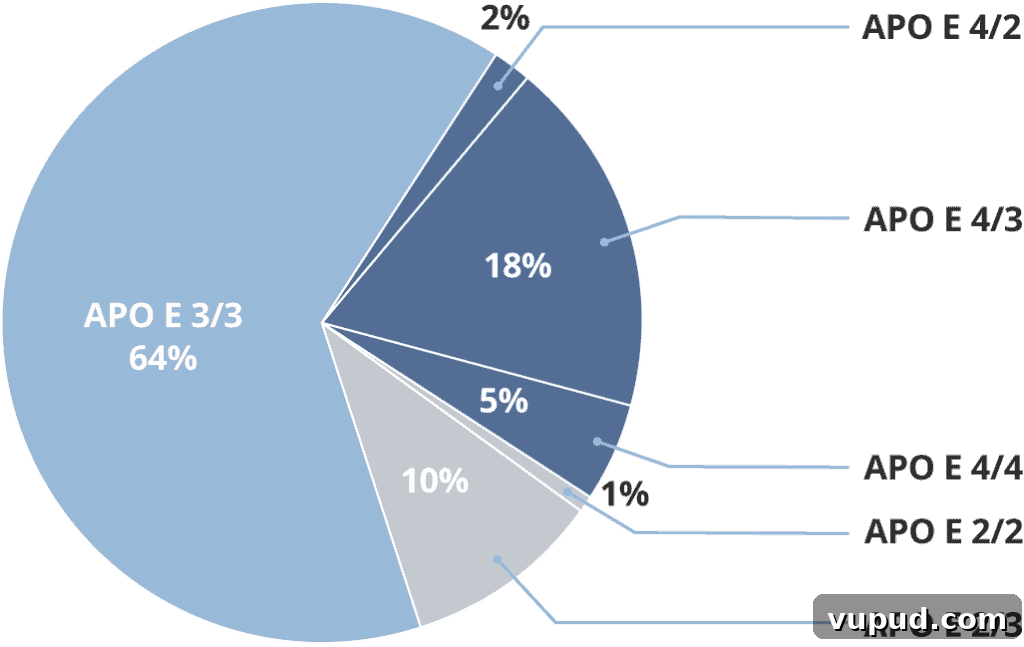
High dietary fat intake typically increases circulating lipoproteins. Since lipoproteins carry both fats and cholesterol, increasing fat in the diet often stimulates the body’s cholesterol production and alters blood lipid profiles. In practical terms, a high-fat diet can raise cholesterol-related metrics for many people.
How your body handles that rise depends in part on APOE type. Lipoproteins are composed of cholesterol and triglycerides, and their levels reflect both dietary intake and individual metabolic responses.
APOE 2 Carriers Thrive On High Fat
People with APOE2 alleles often tolerate higher fat, lower carbohydrate diets well. Cholesterol plays essential roles in hormone production and cell function, and many APOE2 carriers maintain healthy lipid profiles on higher-fat diets. By contrast, research indicates that APOE4 carriers are more sensitive to increases in dietary cholesterol and saturated fat.
APOE4 carriers often benefit from diets lower in saturated fat and richer in monounsaturated fats, combined with controlled carbohydrate intake. Meanwhile, APOE2 carriers commonly fare well on higher-fat, lower-carbohydrate approaches, sometimes regardless of saturated fat intake, though individual variation exists.
The genetic effects are dose-dependent: having one copy of an APOE variant typically produces different effects than having two. For example, people with E2/E3 often have naturally lower cholesterol levels than those with E4/E4, who are more prone to higher cholesterol and associated risks.
Some studies associate APOE4 with an increased risk of Alzheimer’s disease, although risk varies by many factors and is not solely determined by APOE status.
In my case, genetic testing revealed a combination of APOE3 and APOE4. That suggests a dietary pattern similar to a Mediterranean-style approach — emphasizing monounsaturated fats like olive oil and nuts, lean proteins, vegetables, and moderate carbohydrates — could be appropriate for my lipid management and overall health.
As always, this article does not replace personalized medical advice. I am not a physician; I am summarizing research findings and practical observations. If you have concerns about your diet or genetic risk factors, consult a qualified healthcare professional for tailored guidance and appropriate testing.
Further Reading On APOE Genes
- GHHealthWatch
- GHR (Genetics Home Reference)
- Free Mediterranean Diet 7 Day Meal Plan