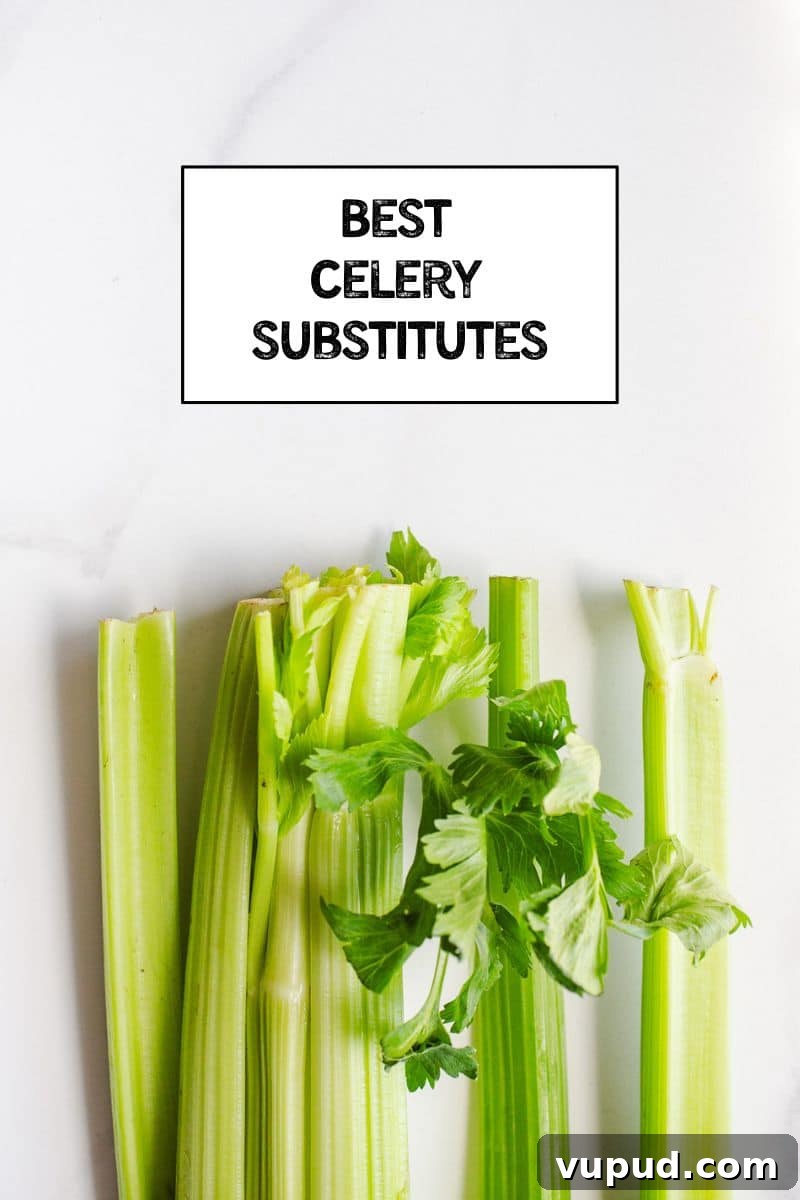
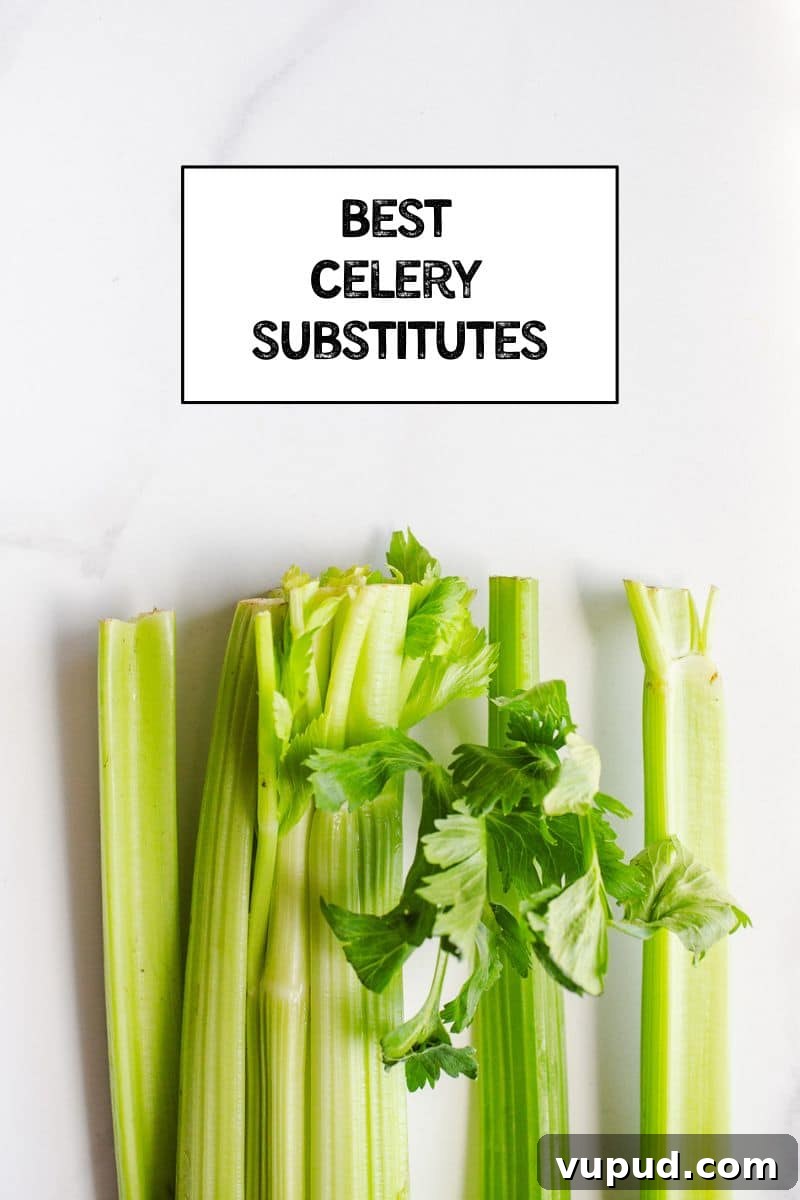
Looking for a fresh celery substitute? This guide presents the best alternatives—such as celery root, jicama, fennel, and green peppers—and explains how to use them so you can achieve similar flavor and texture in a variety of recipes.
[feast_advanced_jump_to]
What is celery?
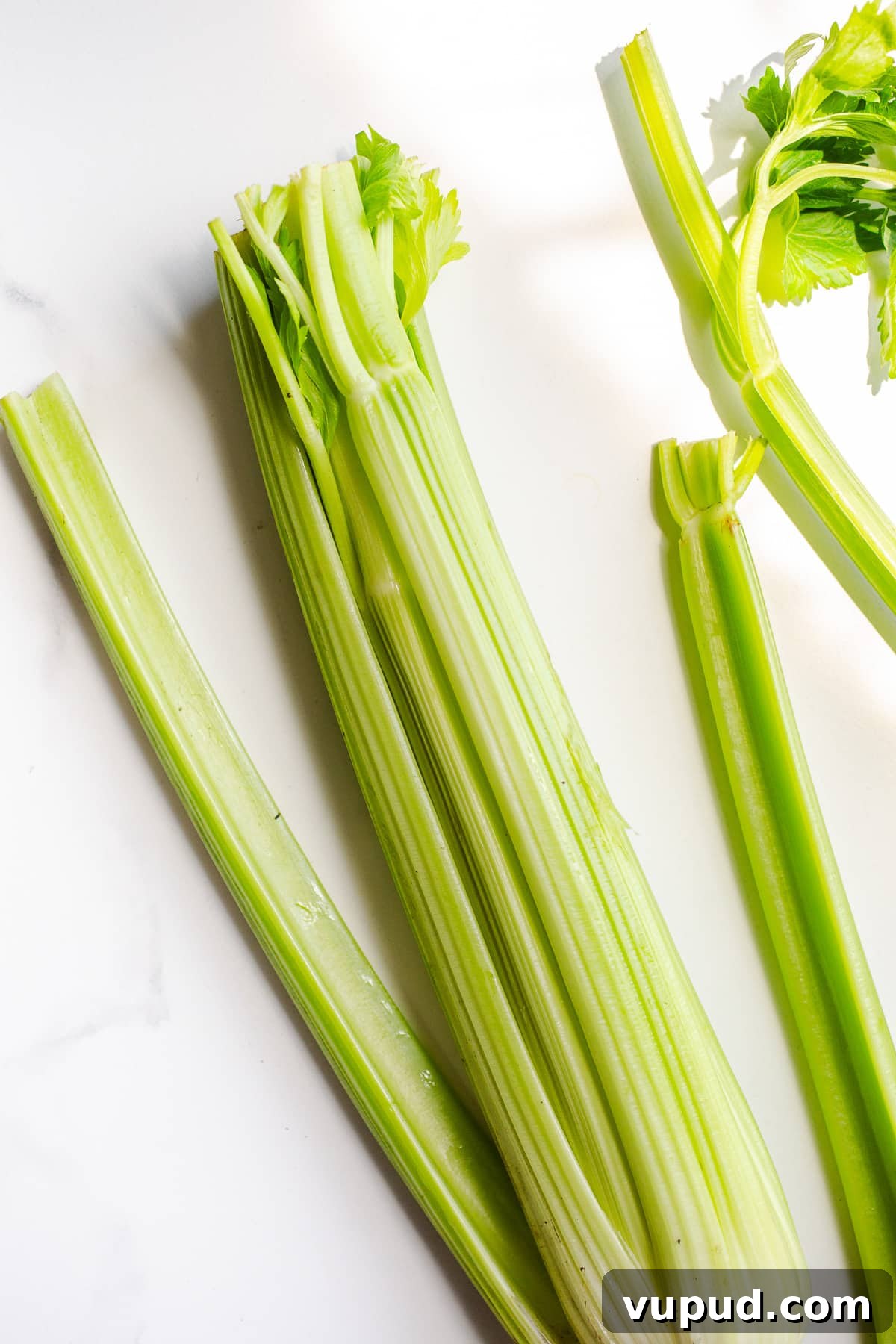
Celery is a crisp, pale-green vegetable known for its long, fibrous stalks and feathery leaves. Valued for its crunch and mildly peppery, slightly bitter flavor, celery is used raw in salads and crudités as well as cooked in soups, stews, braises, and stocks. It is low in calories, high in water, and provides nutrients such as vitamin K, vitamin C, potassium, and folate.
Uses
Celery’s texture and flavor make it useful in many culinary applications. Common uses include:
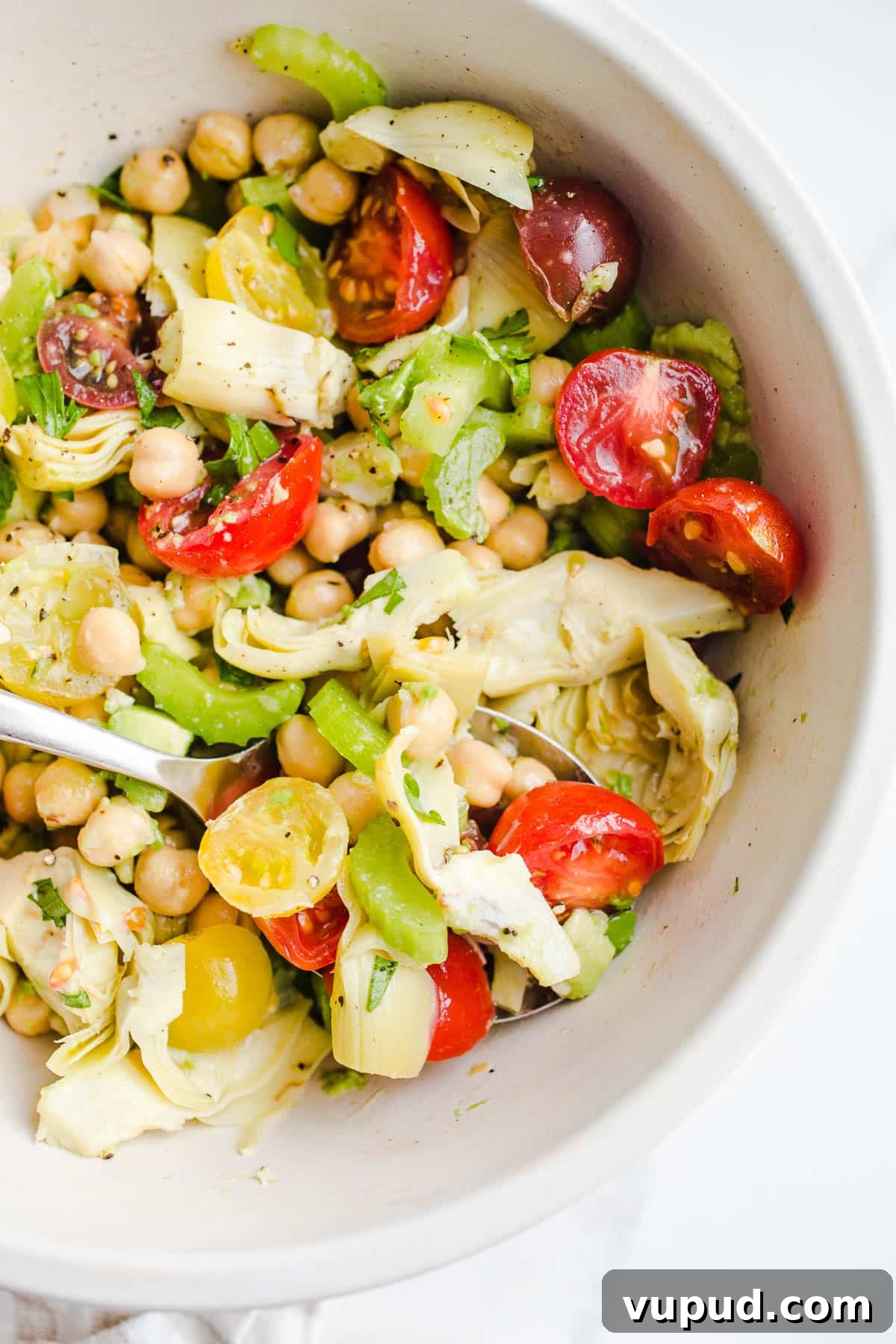
Salads – Chopped celery adds crunch to green salads, grain bowls, and slaws.
Snacking – Celery sticks are a classic healthy snack, often paired with dips such as hummus, peanut butter, or cream cheese.
Crudité platters – Celery is a standard component on vegetable platters served with dip.
Soups and stews – Celery contributes flavor and texture to stocks, soups, and stews and plays a role in aromatic bases like mirepoix or the Cajun “holy trinity.”
Stir-fries – Sliced celery adds freshness and bite to quick-cooked dishes.
Stuffing and braises – It provides both moisture and savory depth in stuffing and slow-cooked dishes.
Juice – Celery juice is consumed on its own or blended with other produce for a hydrating beverage.
Leaves and seeds – Celery leaves can be used as a fresh herb, and celery seeds are a spice for dressings, slaws, and pickling.
What is a good substitute for celery?
If you need a celery substitute, look for vegetables that mimic its crunch, moisture, and mild savory flavor. Below are reliable options you can find at most markets along with guidance for using them in recipes.
1. Celery root (celeriac)
Celeriac has an earthy, mildly nutty flavor and a firm texture when raw that softens when cooked. It works well grated into salads, thinly sliced in slaws, or diced in soups and stews. Use a 1:1 volume substitution (for example, 1 cup celeriac for 1 cup celery) and adjust for preferred texture.
2. Fennel stalks
Fennel offers a crisp bite with a hint of licorice and a subtle sweetness. It roasts and sautés nicely and makes a flavorful addition to salads and braises. Substitute fennel stalks 1:1, keeping in mind the flavor is a bit more pronounced than celery.
3. Jicama
Jicama is crisp, juicy, and mildly sweet, making it an excellent raw substitute in salads and crudités. Because of its refreshing crunch, use a 1:1 substitution by volume when replacing celery in cold dishes.
4. Green bell pepper
Green bell pepper delivers a crunchy texture and a slightly tangy sweetness. It’s well suited to salads, stir-fries, and stuffing. Substitute bell pepper 1:1, and consider adding a touch of acid if you want to offset its sweetness.
5. Leeks
Leeks have a mild, onion-like flavor and are less crunchy than celery, but they lend a similar aromatic quality to cooked dishes. Use only the white and light-green parts and substitute by volume (1:1) in soups, stews, or sautés.
Tips
When replacing celery, consider both texture and flavor so the final dish keeps its intended character. Use these practical tips:
Match texture: For raw dishes, prioritize crisp vegetables like jicama or green pepper. For cooked applications, choose options that soften appropriately, like celeriac or leeks.
Consider flavor: Celery’s mild, slightly peppery profile can be approximated with celeriac or fennel; bell peppers and jicama are sweeter and may need balancing with acid or seasoning.
Adjust cooking time: Different vegetables cook at different rates—watch texture and shorten or lengthen cooking as needed.
Substitution ratios: A 1:1 ratio is a good starting point for most swaps; modify amounts to taste based on water content and flavor intensity.
Enhance missing notes: If the substitute lacks celery’s slight bitterness or peppery note, add a pinch of celery seed, a little celery salt, or a squeeze of lemon to approximate those flavors.
Balance moisture: Celery’s high water content can affect a recipe’s overall moisture. If your substitute is drier, add a bit more liquid; if it’s juicier, reduce added liquids accordingly.
Combine substitutes: Blending options—such as mixing crunchy jicama with a touch of fennel—can recreate both the texture and the subtle savory note of celery.
Conclusion
Several vegetables can replace celery depending on the dish and the role celery plays. Celeriac, jicama, fennel stalks, green bell pepper, and leeks are versatile substitutes that cover a range of textures and flavors. Keep in mind differences in moisture and taste, use a 1:1 substitution as a starting point, and adjust seasoning and cooking time to achieve the best results.
More gluten-free ingredient guides
-
Is Sesame Oil Gluten-Free?
-
Rhubarb vs Celery: What’s the Difference?
-
Is Hummus Gluten-Free?
-
Is Nutritional Yeast Gluten-Free?