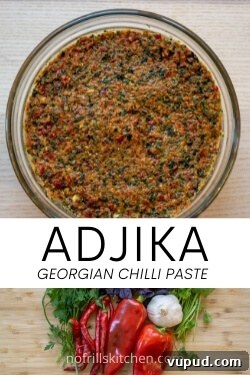
Chilli pastes are enjoying widespread popularity right now — from harissa and gochujang to sambal oelek — and each adds heat and depth to everyday dishes. One lesser-known paste that deserves more recognition is Georgian adjika.
Traditional adjika can be hard to find outside the Caucasus, so here is an easy, fast version you can make at home and use immediately in many dishes.
Adjika is intensely flavorful and spicy. It’s a wonderful condiment for Georgian recipes, an excellent rub for chicken or lamb, and delicious simply spread on bread. Keep a jar in the refrigerator and you’ll find countless uses for it.
What is Adjika?
Adjika (also spelled ajika, from Georgian აჯიკა) originates in the Samegrelo region of western Georgia and in Abkhazia. In its traditional Megrelian and Abkhazian forms it is a thick paste made from hot chillies, sweet peppers, garlic, fresh herbs and a distinct trio of Georgian spices. It’s used to season stews, as a base for sauces and as a rub for roasted meats.
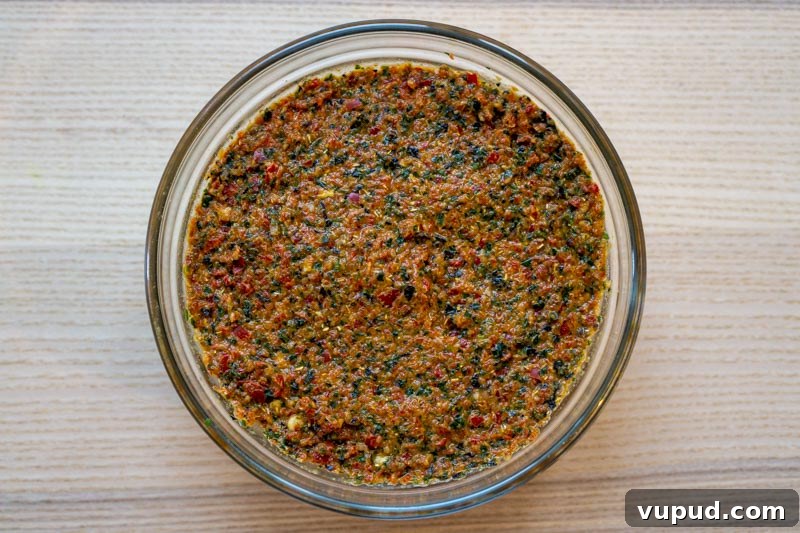
One iconic use of adjika in Georgia is rubbing a suckling pig for a New Year’s supra before roasting it in a tone, a stone oven similar to a tandoor.
In Georgia you’ll commonly find two main varieties: red adjika made with red peppers and chillies, and green adjika made with green peppers and chillies. Outside Georgia, especially in Russia, Ukraine and some Baltic countries, a very different “adjika sauce” has become popular. That version is often tomato- and carrot-based with only a mild heat and resembles Balkan ajvar more than the original paste. The recipe below follows the more traditional Georgian approach.
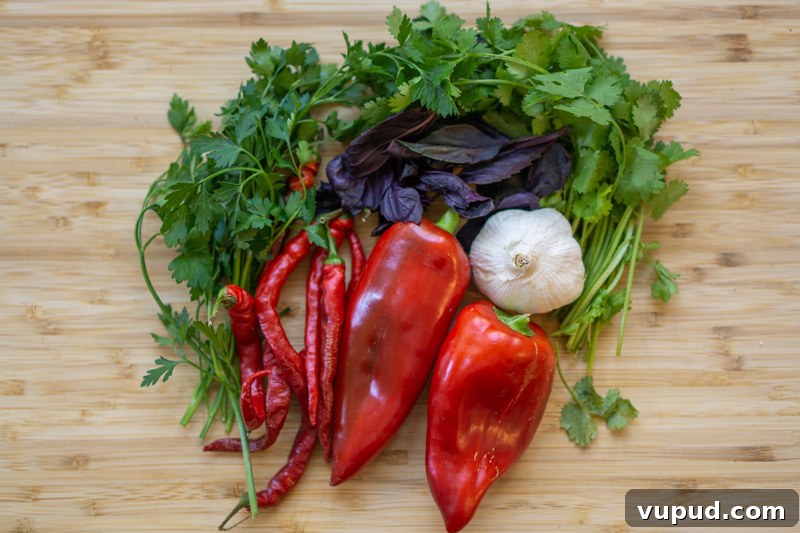
How to Make Georgian Adjika
This version comes together quickly, especially with a food processor. If you don’t have one, use a mortar and pestle or a meat grinder for a more traditional texture.
Start by removing the seeds and ribs from red bell peppers and roughly chopping them. Prepare red chillies (such as Fresno or cayenne) the same way — remove seeds and ribs partially or completely depending on how hot you want the paste, then roughly chop.
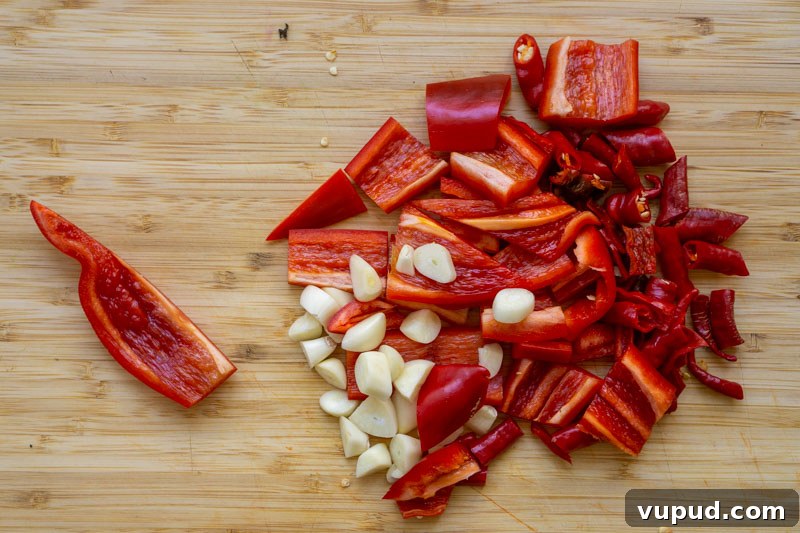
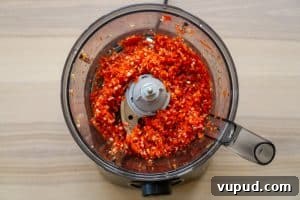
Roughly chop garlic cloves and add the peppers, chillies and garlic to the food processor. Pulse until the mixture is very finely chopped and uniform.
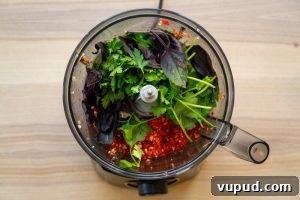
Add a generous amount of fresh herbs: cilantro, purple basil (Thai basil is an acceptable substitute if purple basil is unavailable) and flat-leaf parsley. Scrape the bowl and pulse until the herbs are evenly distributed.
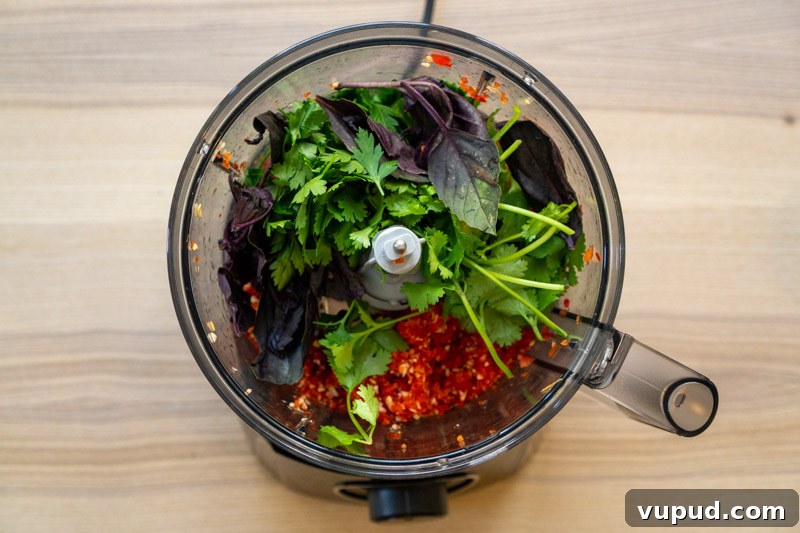
Add about a tablespoon of salt. Traditional Georgian adjika is quite salty because salt helps preserve it; when using adjika in a dish, reduce any other added salt accordingly.
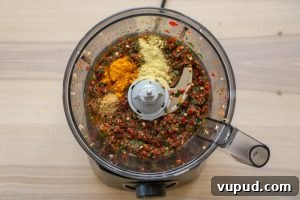
Next add the characteristic Georgian spices: blue fenugreek, ground marigold (often called Georgian saffron) and ground coriander seed. Pulse briefly to combine the spices with the pepper-herb mixture.
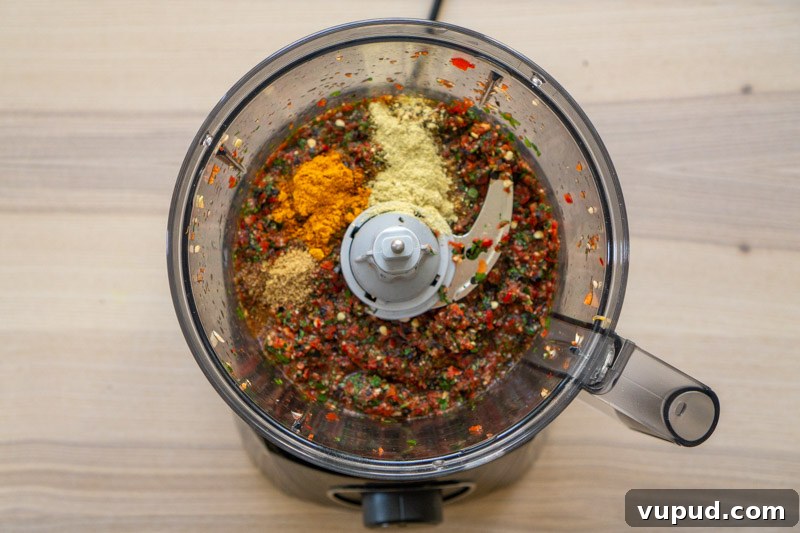
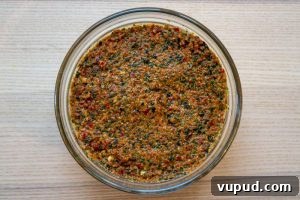
With the processor running, slowly drizzle in a couple of tablespoons of sunflower oil and process until the mixture emulsifies into a smooth, cohesive paste. Transfer the adjika to a fine mesh sieve and let excess liquid drain so the texture becomes thick and paste-like. Taste and adjust seasoning; it should be notably salty to help preservation.
Store the finished adjika in an airtight container in the refrigerator. Properly salted and kept cold, it will keep a long time — use common sense and discard it if signs of spoilage appear. You can also use it immediately in sauces, marinades or as a condiment.
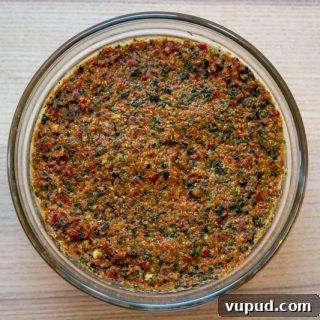
Georgian Adjika Paste
Ingredients
- 2 red bell peppers roughly chopped, seeds and ribs removed
- 50 g (⅓ cup) red chilies such as Fresno or cayenne, roughly chopped; remove seeds and ribs if desired
- 6 cloves garlic peeled and roughly chopped
- 15 g (1 cup) fresh cilantro
- 10 g (¼ cup) purple basil
- 10 g (¼ cup) flat-leaf parsley
- 10 g (1½ tsp) salt
- 2 tsp blue fenugreek
- 1 tsp ground marigold (Georgian saffron)
- 1 tsp ground coriander seed
- 2 tbsp sunflower oil
Instructions
-
Add red peppers, red chillies and garlic to the bowl of a food processor. Pulse until the mixture is very finely chopped.

-
Scrape down the bowl and add cilantro, basil, parsley and salt. Pulse until the herbs are finely chopped and evenly mixed.
-
Add blue fenugreek, ground marigold and ground coriander. Pulse briefly to combine. With the processor running, slowly stream in the sunflower oil until the mixture emulsifies.
-
Transfer the adjika to a fine mesh sieve and allow excess liquid to drain until the paste is thick. Taste and adjust seasoning — traditional adjika is quite salty to preserve it. Store in an airtight container in the refrigerator or use immediately.
Video
Nutrition
Making a traditional Georgian adjika is straightforward and rewarding — the result is a bold, versatile paste that adds real depth to many dishes.
Have questions about this adjika or tips to share? Leave a comment below and I’ll respond.