Why Food Sticks to a Stainless Steel Pan
Stainless steel is not naturally nonstick. Under magnification its surface shows tiny irregularities, and meat or egg proteins readily cling to those microscopic rough spots. Placing a pan that is cold or only slightly warm on the heat allows food to adhere at first contact, long before proper cooking begins.
At the right temperature, the situation reverses. A thin film of steam forms between the food and the pan surface, greatly reducing adhesion. In other words, the issue is usually heat management rather than the pan’s quality. Many people choose stainless steel for its durability: it lasts for years and withstands high temperatures without damage, unlike a coated nonstick pan that can scratch and degrade over time.
Pans with PTFE coatings (commonly known as Teflon) are also considered safe by health authorities when they are in good condition and used correctly. The PFOA once used in their manufacture has been banned in the European Union since 2020.
The Water-Drop Test: A Reliable Guide
Everything starts with preheating the pan empty. Heat the pan dry over a medium to moderately high flame until the metal warms evenly—usually about two to three minutes. This often-overlooked step sets the stage for everything that follows.
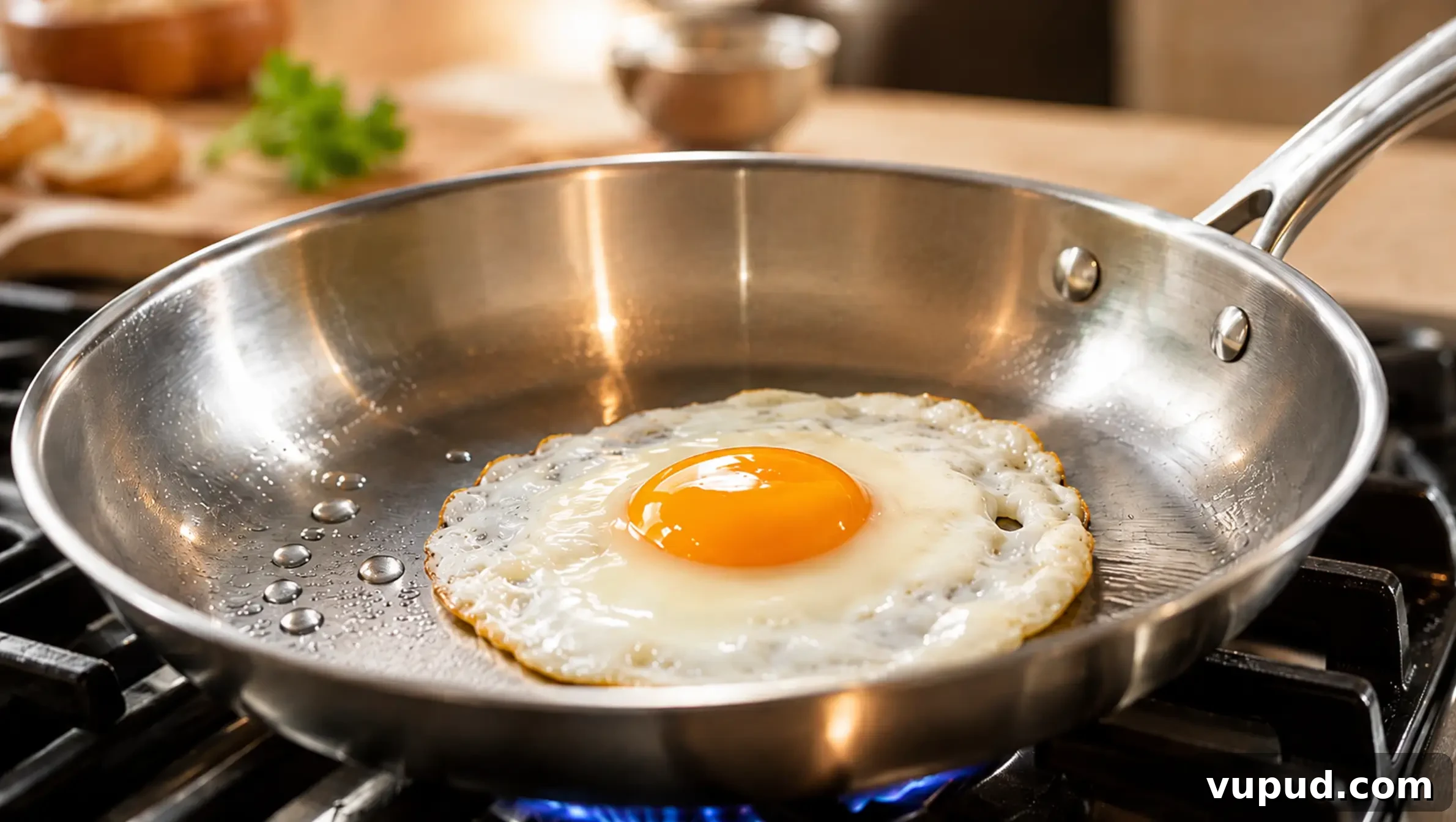
Next comes the decisive gesture: the water-drop test. Throw a few drops of water into the pan to act as a simple thermometer. If the drops sizzle and evaporate immediately, the pan is still too cold and food placed now will stick. If the drops gather into small beads that roll around like pearls or mercury without vanishing, the pan is ready.
This curious behavior is called the Leidenfrost effect. At that temperature a vapor cushion forms beneath the drop, lifting it above the metal and preventing it from sticking while it skates across the surface. The same vapor layer then forms beneath food and helps it release more easily.
When to Add Fat
A common mistake is oiling the pan at the start while it’s still cold. Fat should be added only after the water-drop test succeeds, never before. As soon as the water beads appear, introduce the fat—whether butter, a neutral-flavored oil, or olive oil—into the hot pan.
A few seconds are enough for the fat to heat and coat the surface, then add the food. There is no need to heat at maximum power. Stainless steel retains heat well, especially pans with a thick or multi-layered base. Excessive flame can quickly burn the fat and make cooking harder to control, while a moderate to fairly high heat already sears meat or vegetables effectively.
Why Meat Releases Itself
Meat that sticks on first contact is normal and even a positive sign. Proteins attach to the metal initially, then release themselves once a golden crust forms. The mistake is trying to lift or flip the food too soon, which tears the fibers and leaves part of the piece stuck to the pan.
The right approach is simple: patience. Wait a few more seconds and the steak, chicken breast, fish fillet, or grilled vegetables will almost lift on their own when nudged gently. Even an egg will come away if you handle it calmly. As for white or iridescent marks that sometimes appear after cooking, they are harmless—often caused by water hardness or localized overheating—and a splash of white vinegar or a pinch of baking soda will restore the pan’s sheen.