Week four, day one — and already we’ve learned so much. Each day I leave class impressed by what we accomplish in a single session, even when service feels rushed. Today’s menu introduced several new dishes and techniques. I’ll begin with pastry and dessert, taught by Chef Somchet from Thailand, who returned today. She’s energetic and will be leading our pastry lessons from now on, with occasional Asian dishes when time allows.
LA TARTE AUX POIRES BOURDALOUX — the classic poached pear tart — was our pastry for the day:
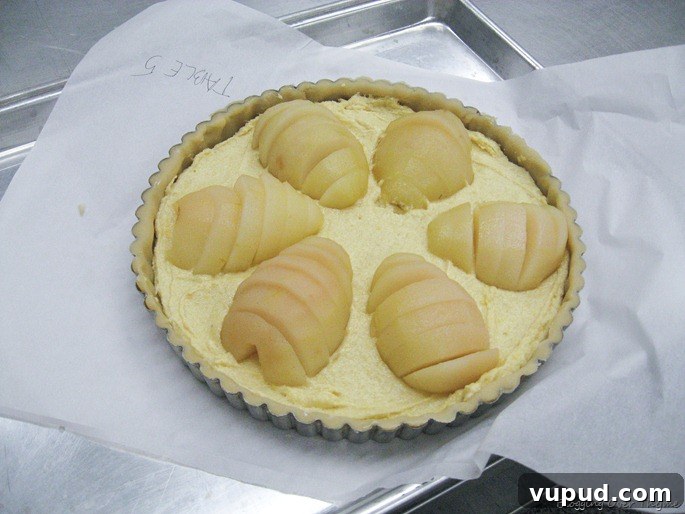
The tart used a pâte sucrée shell, a frangipane filling, and pears poached in a vanilla-scented simple syrup. Because the filling needs cooking time, we did not blind-bake the shell. After forming and rolling out the shell, we prepared the frangipane.
Frangipane is a rich almond cream made from butter, sugar, almond flour, eggs, vanilla extract, lemon zest, a splash of rum, and a small amount of all-purpose flour. We combined these ingredients in stand mixers until smooth. Meanwhile, we peeled and cored the pears (rubbing them with lemon to prevent browning) and poached them in a simmering vanilla-scented simple syrup until fork-tender. After cooling the pears in an ice bath, we sliced them for assembly.
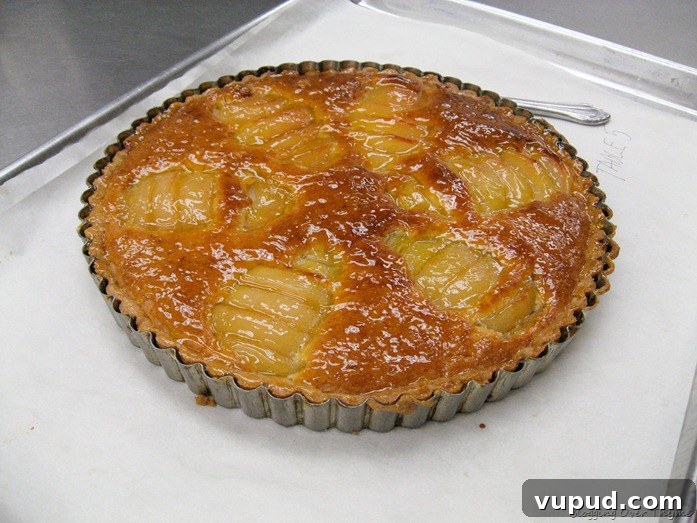
To assemble, we filled the tart shell halfway with frangipane using an offset spatula, arranged the sliced poached pears in a circular pattern, and baked the tart for about 45 minutes. The frangipane puffs up as it cooks. Once out of the oven, we brushed the tart with apricot glaze for a shiny finish. The result: elegant and delicious.
For our main course we made LA BLANQUETTE DE VEAU À L’ANCIENNE AUX CHAMPIGNONS — a veal blanquette with pearl onions and mushrooms.
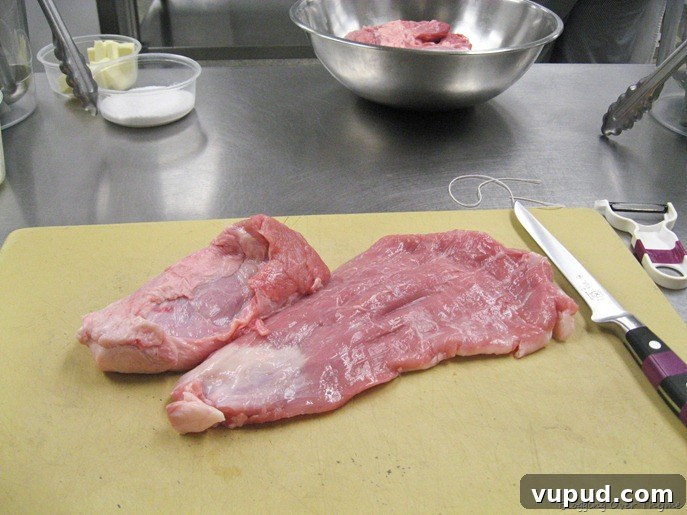
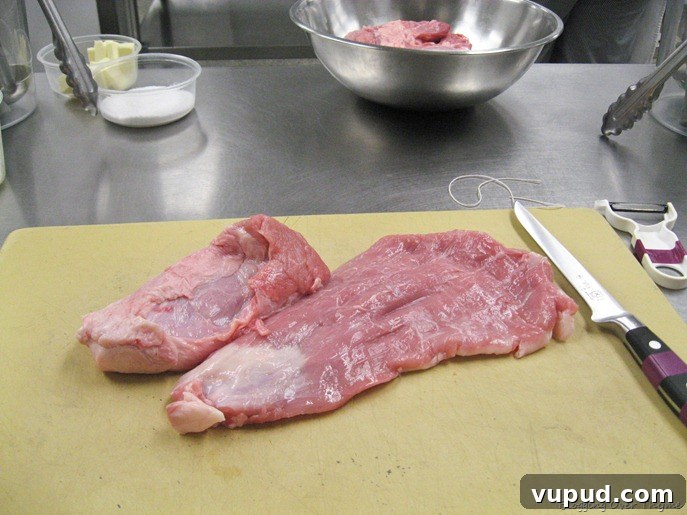
A blanquette is a classic white stew, typically made with veal. After mastering chicken and fish last week, we moved on to a new protein — veal — and it was my first time cooking it. We used veal neck, a tougher but very flavorful cut that benefits from long, gentle cooking. First we trimmed excess fat and silver skin, then cut the meat against the grain into small pieces.
The veal was covered with cold stock — an essential step to avoid prematurely cooking the meat and sealing in unwanted fat — and slowly brought up in temperature without reaching a full simmer. We skimmed surface fat as it warmed, then added aromatics: an onion piqué (half an onion studded with cloves) and a bouquet garni of carrot, leek, celery, thyme, bay leaf, and parsley tied together. The veal cooked gently for one to two hours until tender.
Once tender, we strained the meat and reserved the cooking liquid, passing it through a chinois to remove impurities. The sauce was thickened with a roux (equal parts butter and flour cooked briefly), then enriched with heavy cream and, classically, an egg yolk for added silkiness and body. The meat was returned to the sauce along with cooked pearl onions, sautéed button mushrooms, and the chopped carrot from the bouquet garni. The blanquette was served with rice pilaf.
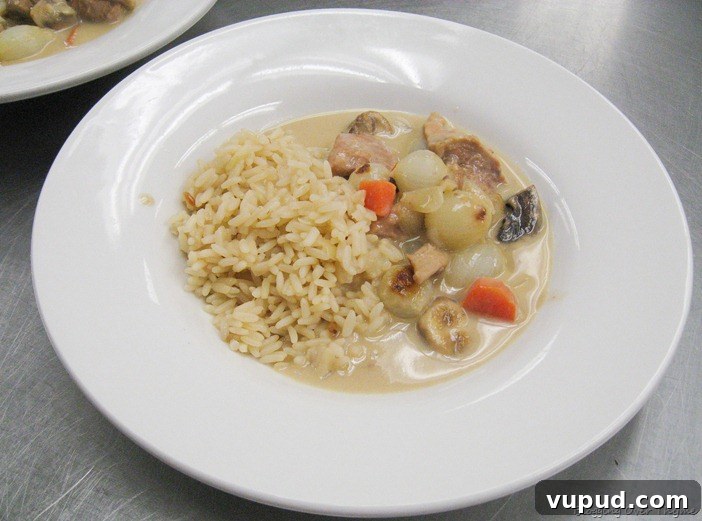
I know an egg yolk in a stew sounds odd, but it contributed a lovely texture. I often assume I won’t like many classic preparations but usually end up appreciating them — a reminder that classics earn their place for good reason.
This was officially the day of soups and stews. In addition to the blanquette, we made LE POTAGE SAINT-GERMAIN, a smooth pea soup named after its regional origins.
Surprisingly simple and quite tasty — even for someone who isn’t a huge pea fan — the soup began by sweating leeks and celery, then adding stock and frozen peas. For depth of flavor we included a piece of bacon, garlic, thyme, parsley, and bay leaf.
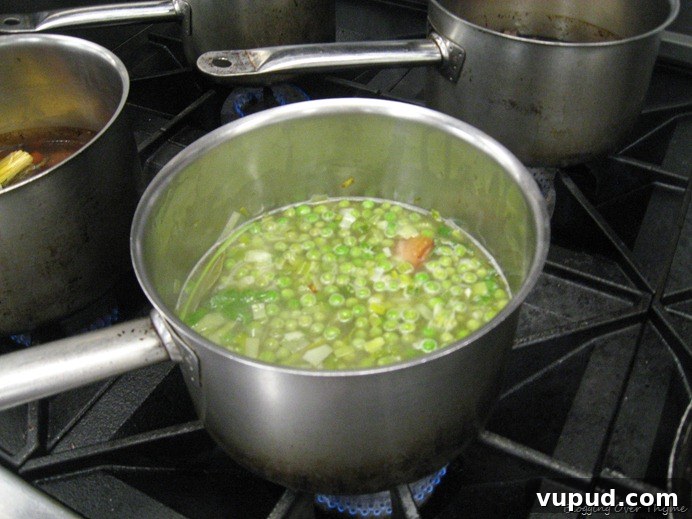
After simmering to develop flavor, we pureed the soup and passed it through a chinois for an extra-smooth texture. A final whisk of butter — montée au beurre — gave the soup a glossy finish and richer mouthfeel. We garnished with sautéed croutons and diced bacon used in the stock.
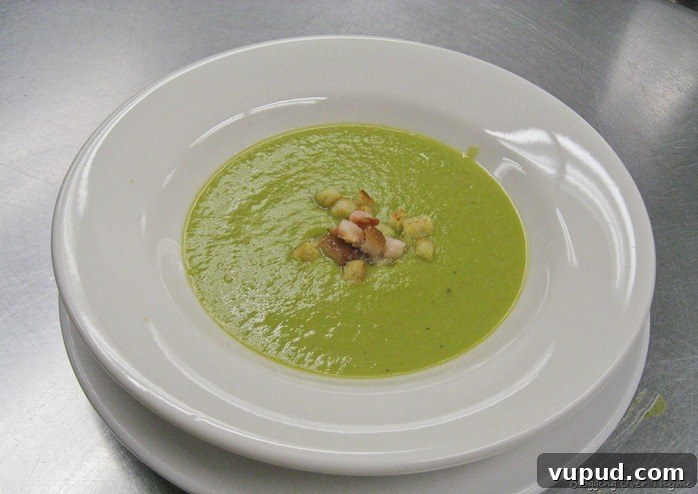
It was the perfect menu for a cold winter day. I’m glad I started the program in January so I can truly enjoy these hearty soups — I can’t imagine eating them in the heat of summer.
Overall the day felt relatively relaxed compared with our hectic Friday menu, though we still rushed at the end to plate and serve. Mostly, things felt under control, which is always a welcome feeling.
Now I’m off to study for my first practical and theory exam this Thursday, and to finish my recipe notebook, which I haven’t yet described here. Oops!
Happy Monday!