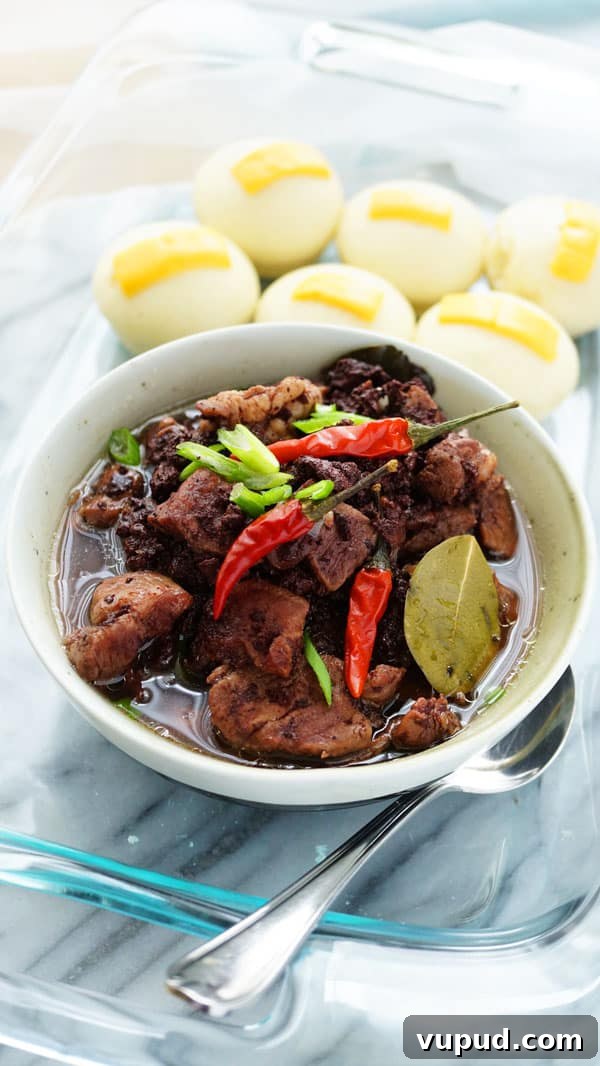
DINUGUAN RECIPE KAPAMPANGAN STYLE
Dinuguan Kapampangan is a classic Filipino pork blood stew from the Pampanga region. There are many regional versions of dinuguan across the Philippines—Visayan, Ilokano and commercial adaptations—yet this Kapampangan style remains a favorite in our home because it’s the version my husband learned from his mother. It uses pork, offal and fresh pig’s blood, resulting in a rich, savory stew commonly served with puto cheese or steamed rice cakes.
What is Dinuguan?
The name dinuguan comes from the Filipino word dugo, meaning blood. This hearty stew pairs pork meat and offal with coagulated blood to create a deeply flavored, slightly tangy soup. It may seem unusual to those unfamiliar with blood-based dishes, but it’s comparable in concept to some European blood sausages or stews that use blood as a thickening and flavoring agent. Vinegar plays an important role in dinuguan: it helps balance the richness and neutralizes any metallic aroma from the blood.
Characteristics of the Kapampangan Style
The Kapampangan version is similar to other regional recipes but typically includes marinating the meat in fish sauce before cooking. When the pork is browned and the blood is added, vinegar is introduced soon after; instead of stirring vigorously, the liquid is gently cut through with a ladle to combine. This technique helps achieve a smooth, deep-brown finish without over-agitating the blood. The result is a tangy, savory stew with no strong “bloody” smell and a comforting, robust flavor profile.
HOW TO MAKE DINUGUAN
- Boil and clean any intestine or offal thoroughly, then slice into bite-sized pieces.
- Marinate pork pieces in fish sauce for at least 15 minutes.
- Heat oil in a large pot and sauté garlic until light brown, then add onion and cook until translucent.
- Add the marinated pork and cook on low heat, covered, until most of the liquid evaporates and the pork begins to brown.
- Add Anaheim peppers and prepared intestine, then pour in the pork blood while whisking quickly to prevent coagulation. Let it simmer on medium heat.
- Add vinegar (and bay leaves if using). After adding vinegar, do not stir vigorously—cut through the ingredients gently with a ladle to incorporate the liquid. Simmer until the sauce darkens to a rich brown and the flavors meld, roughly 30–45 minutes.
- Taste and adjust seasoning with additional fish sauce or vinegar as needed.
INGREDIENTS
- 3 lbs boneless pork shoulder, cut into strips or bite-size pieces
- 10 cloves garlic, finely chopped
- 4 Anaheim peppers (about 4-inch size)
- 3 dry bay leaves (optional)
- 5 cups pork blood (or about 2 lbs if measured by weight)
- 1 cup vinegar (add more if needed)
- 1 large onion, chopped
- 1 tablespoon cooking oil
- 1/2 cup fish sauce for marinating (adjust more for seasoning)
Why I Love This Kapampangan Dinuguan
- It’s delicious and well-balanced—vinegar removes any unpleasant blood aroma and enhances flavor.
- Eating dinuguan feels adventurous and culturally authentic; it’s a memorable dish to share with guests.
- It freezes and reheats well, so you can make a large batch and store portions for later.
Storage and Reheating
- Divide cooled dinuguan into smaller airtight containers or zip-top bags and freeze for longer storage.
- Keep in the refrigerator for up to three days.
- Reheat gently on the stove or microwave until piping hot before serving.

Recipe Summary
Prep Time: 15 mins | Cook Time: 1 hr | Servings: 10
Course: Main | Cuisine: Filipino
Instructions (Condensed)
- Marinate pork in fish sauce.
- Sauté garlic and onion in oil until fragrant and translucent.
- Add pork and cook on low until the liquid evaporates and pork browns.
- Add peppers, cleaned intestine, then pour in pork blood while whisking to prevent coagulation.
- Simmer on medium, then add vinegar and bay leaves; avoid stirring vigorously—gently cut through ingredients with a ladle.
- Cook on low for about 45 minutes more, until the sauce darkens to brown. Adjust with fish sauce or vinegar to taste.
Serve hot with puto cheese, steamed rice cakes, or plain rice. This Kapampangan take on dinuguan captures the traditional flavors while remaining approachable for those trying pork blood stew for the first time.