
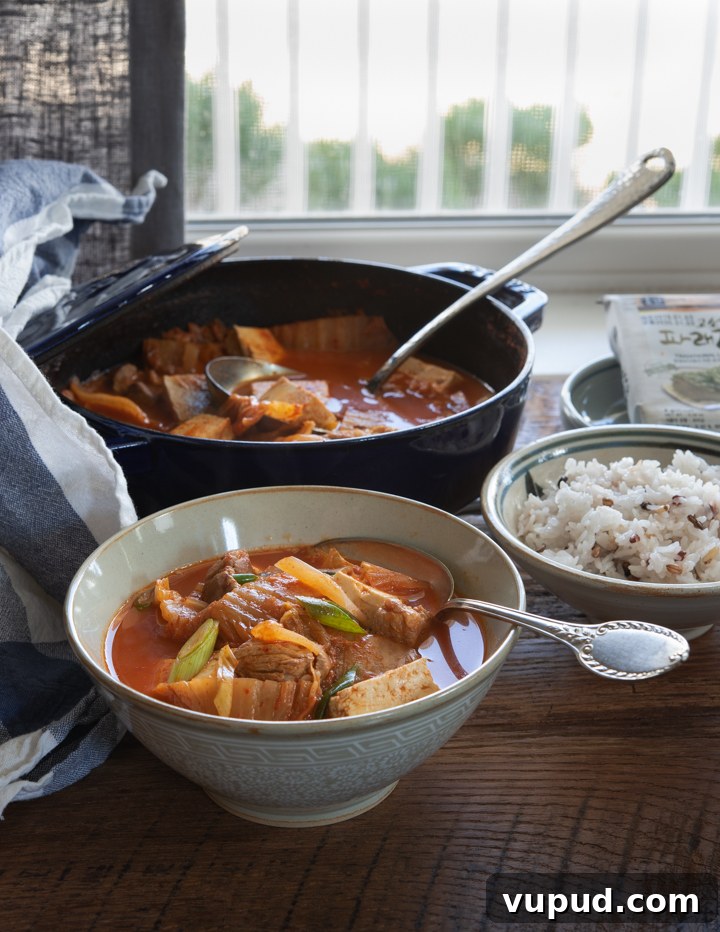
Tomato gives a bright, subtle twist to the classic Korean kimchi stew (kimchi jjigae). Adding tomato sauce lifts the broth and deepens the overall flavor without making the stew taste overtly tomatoey. This gluten-free version is simple to prepare and delivers a comforting, well-balanced stew.

Kimchi stew is a beloved Korean comfort dish, often made with pork. If you haven’t tried kimchi stew with tomatoes, it may sound unusual, but the tomato enhances the broth in a surprisingly delicious way. The tomato’s acidity balances the savory, meaty notes and the tang of fermented kimchi.
In this recipe I adapted the traditional pork kimchi stew by adding tomato sauce and keeping it gluten-free. The result is a rich, fragrant pot of stew that’s both familiar and fresh. Try it—once you taste it, the harmony of flavors will make sense.

Fermented Kimchi and Tomatoes for Kimchi Stew
The bright acidity of tomatoes pairs wonderfully with deeply fermented kimchi. Tomatoes refresh the broth and help balance the fatty, savory quality of pork. You can use fresh tomatoes, but canned tomato sauce is convenient and blends seamlessly into the stew. Crushed tomatoes or tomato juice can be substituted in equal amounts if you prefer.
Cook’s Tip
- Choose pork shoulder or pork butt rather than lean loin. A bit of fat adds depth and mouthfeel to the stew.
- Use well-fermented, sour cabbage kimchi for the most robust flavor. If your kimchi is not very sour, you can add a small pinch of sugar to balance acidity.
- Soft tofu works best in this stew because it soaks up the broth and becomes tender and silky.
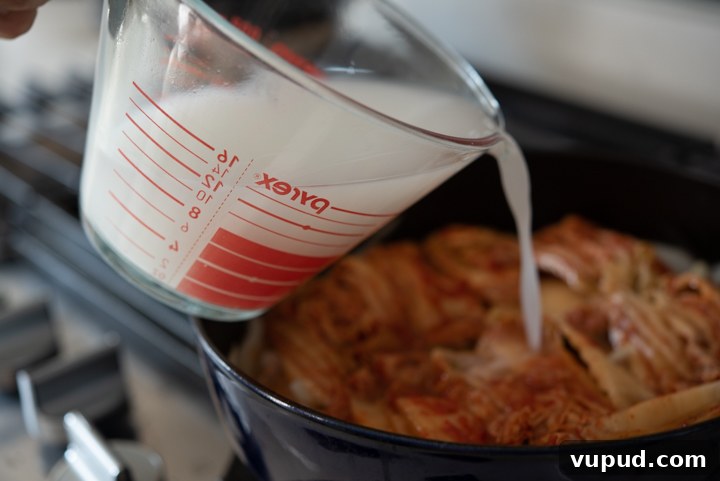
- If you want a slightly thicker, smoother broth, use rice starch water (the cloudy water from rinsing rice). Plain water works fine if rice starch water is not available.
How to make Tomato Kimchi Stew

Heat cooking oil in a soup pot over medium-high heat. Add sliced onion and pork, and cook 2–3 minutes until the pork loses its pink color. Stir in the diced kimchi and a teaspoon of sugar, and continue sautéing for another 2 minutes.
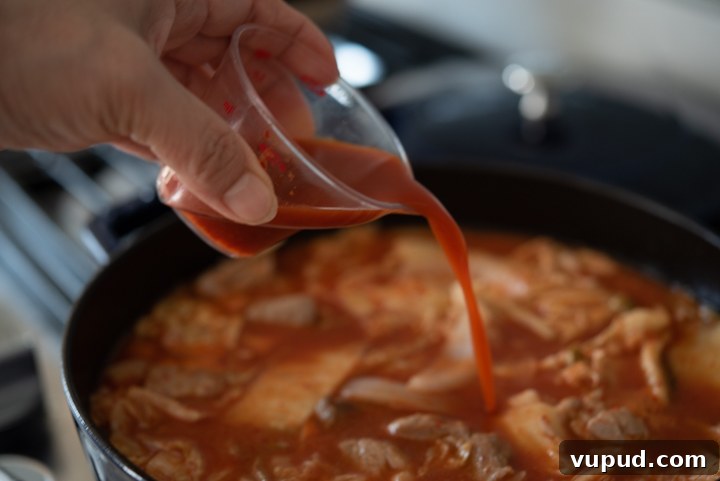
Pour in rice starch water or plain water, then add the tomato sauce and a few tablespoons of kimchi liquid. Stir well and bring the mixture to a gentle boil. Cover, reduce the heat to low, and simmer for 15–20 minutes so the flavors meld.

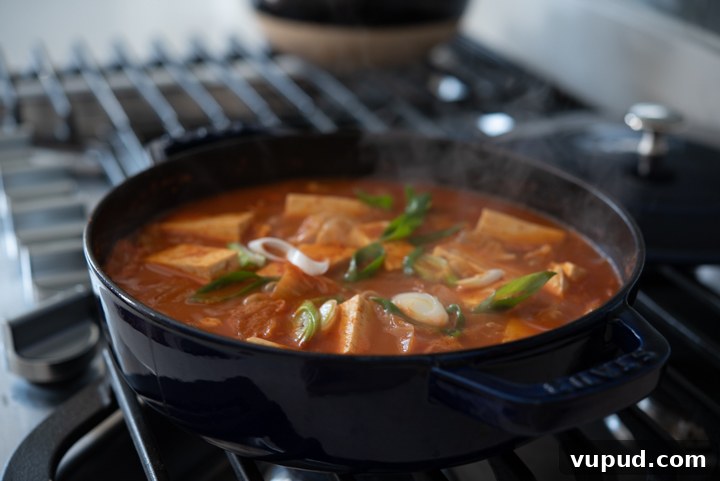
Near the end of simmering, add sliced soft tofu and chopped green onion. Heat just 3–4 minutes until the tofu is warmed through. Season to taste with Korean soup soy sauce (gukganjang) or your preferred salty seasoning.
Serving and Storage Suggestion
Serve the stew piping hot with steamed rice and roasted seaweed sheets for a classic pairing. Leftovers keep well in the refrigerator for up to one week. Reheat gently on the stove or in the microwave until hot.
Other Kimchi Stews You Might Like
- Easy Spam Kimchi Jjigae
- Mackerel Pike Kimchi Stew


Tomato Kimchi Stew
Ingredients
- 1 tbsp cooking oil
- 1/2 lb pork shoulder or pork butt
- 1/2 onion, sliced
- 2 cups diced sour cabbage kimchi
- 1 tsp sugar
- 2 1/2 – 3 cups rice starch water or plain water
- 1 can (8 oz) tomato sauce
- 3 tbsp kimchi liquid
- 1 pkg (8 oz) soft tofu
- 1 green onion, sliced
- Korean soup soy sauce (gukganjang), to taste
Instructions
- Heat oil in a soup pot over medium-high heat. Add the pork and onion and cook 2–3 minutes until the pork is no longer pink.
- Add the kimchi and sugar; cook 2 more minutes. Pour in rice starch water (or plain water), tomato sauce, and kimchi liquid. Stir well and bring to a gentle boil. Cover, reduce heat to low, and simmer 15–20 minutes.
- Add tofu and green onion; heat through 3–4 minutes. Season with Korean soup soy sauce to taste. Serve hot with rice.